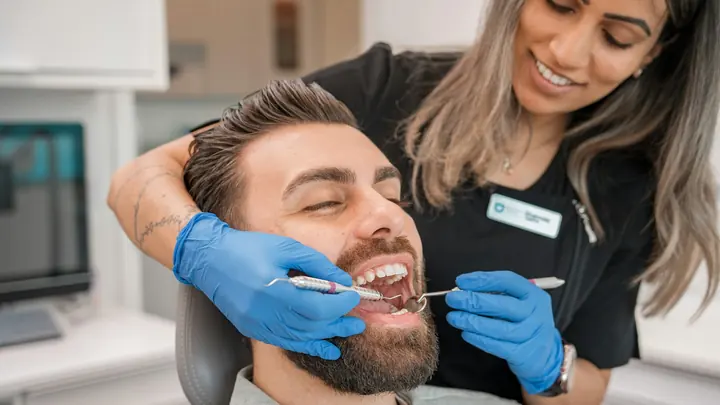
How Often Should You Get a Dental Check-up and Cleaning?
Every 6 months is the common average, but the right interval depends on your gums and teeth. Here is what happens in the visit and how to care for your teeth afterwards.
Read article
You can keep your teeth healthy in Ramadan with a few simple steps: brush well after iftar and after suhoor, clean between your teeth once a day, and drink water regularly between iftar and suhoor. Bad breath while fasting is common and usually normal, and good oral care can reduce it a great deal.

The two most important times to brush are after iftar and after suhoor, because they remove food and sugars that bacteria would otherwise feed on during the long fasting hours. Brush for two minutes with a fluoride toothpaste, and use floss or an interdental brush once a day, ideally after iftar when you have more time.
If you have sweets or acidic drinks, rinse with water straight after eating and wait about half an hour before brushing, because tooth enamel is temporarily softer after acid exposure. Do not scrub hard: a soft brush and gentle circular movements clean well without hurting your gums or causing sensitivity.
This is a question of Islamic jurisprudence, so we simply outline the commonly held views without favouring one. Most scholars consider using a miswak permissible while fasting; they differ on using it after midday, with some regarding it as disliked then and others allowing it throughout the day.
As for toothpaste, many scholars hold that it does not break the fast as long as none is swallowed, with great care to keep it from reaching the throat, while some prefer to postpone it until after iftar because of its strong taste. For peace of mind on religious rulings, ask a trusted scholar or fatwa authority. From a health point of view, brushing with toothpaste after iftar and after suhoor is enough.
Fasting reduces saliva, which is the mouth's natural cleanser, so bacteria multiply on the tongue and between the teeth and produce unpleasant odours. When the body draws on its energy stores, it can also release odours on the breath. Hot weather, dry air-conditioned rooms and drinking too little water at night make it worse. These steps help:
Breaking the fast with dates and water is a good habit, but dates are sticky and cling to teeth, so rinse afterwards and brush later. Ramadan sweets and sweetened juices are often enjoyed throughout the evening, and every time you have sugar your teeth face a fresh acid attack. The answer is not to give them up, but to plan when you have them and clean afterwards.
Many check-ups and preventive treatments can be done during Ramadan, and some patients prefer appointments after iftar. Whether anaesthetic, water or bleeding during treatment affects the fast is also a question for scholars, and you can discuss appointment timing with your dentist.
Do not put off severe pain or swelling until the end of the month, as these need prompt assessment. If you have diabetes and are fasting, speak to your doctor and take extra care of your gums, because changes in blood sugar affect gum health and healing.
Mouthwash is used for rinsing and is not swallowed, and many scholars treat it like rinsing the mouth, provided nothing is swallowed, while many prefer to leave it until night. For the religious ruling, refer to a trusted fatwa authority.
Not necessarily; it is common because of reduced saliva. But if the odour persists after iftar and good cleaning, or comes with bleeding gums or pain, it may signal gum inflammation or decay that needs a check-up.
After is better, so you clear away food before the long fasting hours. If time is short, do not skip brushing; even two minutes helps.
Sugar-free gum after eating stimulates saliva and helps clean the mouth, but it does not replace brushing and flossing.
See a dentist if bad breath persists even after iftar and good cleaning, or if you notice bleeding or swollen gums, pain when eating or drinking, or severe dry mouth that does not improve. A check-up and cleaning a few weeks before Ramadan helps you fast in comfort. You can book a consultation at Medical Care Clinics, where our dental team will assess your mouth and suggest what suits you.
This article is general health education and does not replace a medical examination. Every case needs its own assessment by a doctor.
Every 6 months is the common average, but the right interval depends on your gums and teeth. Here is what happens in the visit and how to care for your teeth afterwards.
Read articleWhitening supervised by a dentist is safe for most people when used correctly. Learn your options, what sensitivity to expect and how to keep your results.
Read articleA Hollywood smile is not one treatment but a plan to enhance the front teeth, usually with veneers. Here are the differences between the options and what to know before you decide.
Read article