Teeth Whitening: In-Clinic or at Home, and Is It Safe for Enamel?
Whitening supervised by a dentist is safe for most people when used correctly. Learn your options, what sensitivity to expect and how to keep your results.
Read article
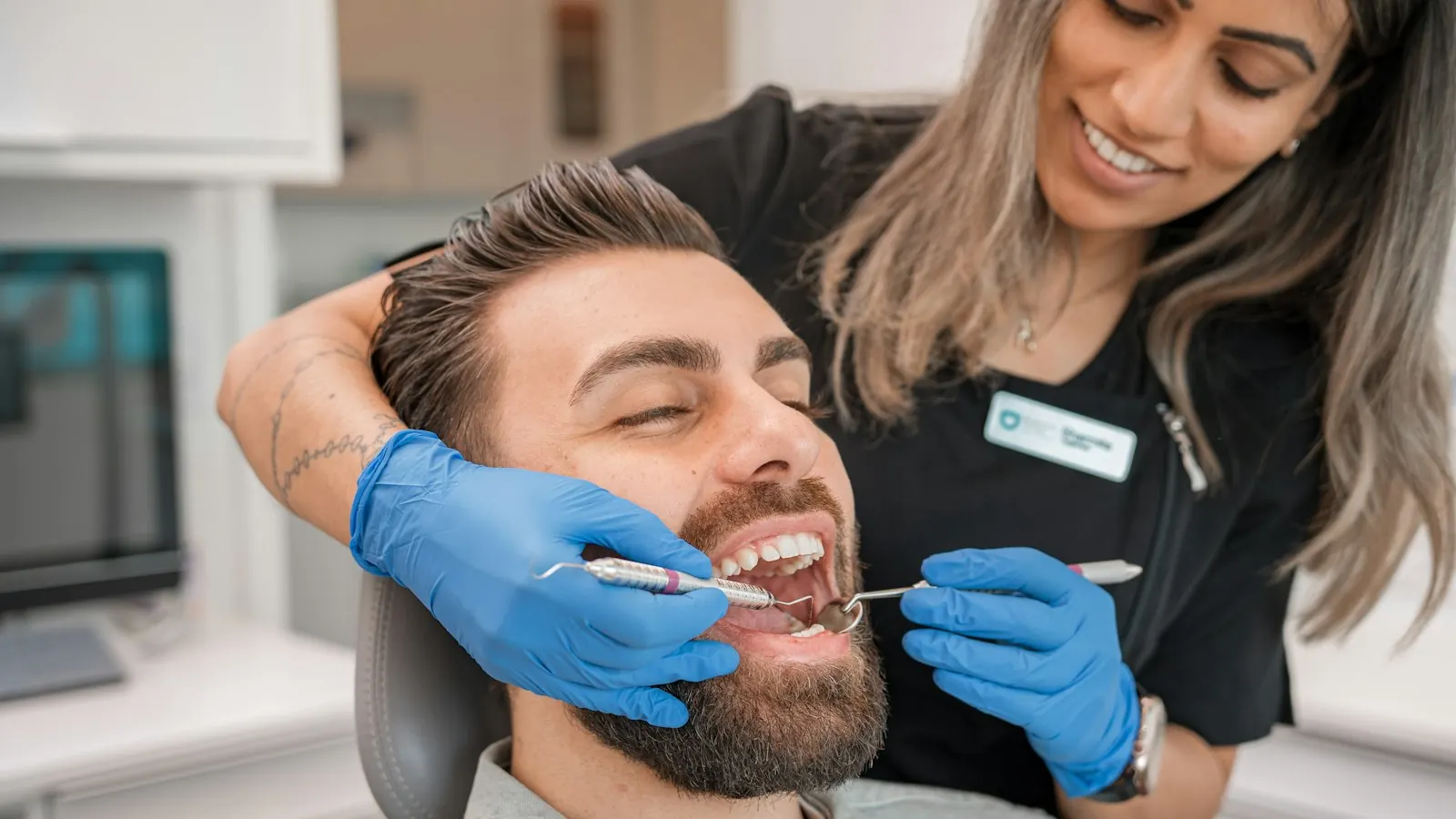
Most dentists recommend a check-up and cleaning about every 6 months, but the right interval differs from person to person. People with gum inflammation, smokers or people with diabetes may need a visit every 3–4 months, while someone with healthy teeth and gums may only need one a year. Your dentist sets the interval that suits you after examining you.
Brushing and flossing remove soft plaque, a film of bacteria that forms on teeth every day. But plaque left in hard-to-reach spots hardens over time into tartar (calculus), which sticks firmly to the teeth and cannot be removed by brushing, however hard you brush.
Tartar irritates the gums, making them red and prone to bleeding. Left alone, it can progress to deeper inflammation around the teeth that weakens the bone supporting them. Regular check-ups also catch decay early, when treatment is simpler and quicker.
There is no single interval that fits everyone. Major health bodies link your next visit to your own risk of decay and gum disease, and the common average is once every 6 months.
The visit usually takes 30 to 60 minutes and follows clear steps:
Scaling done by a qualified dentist or hygienist does not weaken enamel or thin the teeth. The "gaps" some people notice afterwards are usually spaces the tartar itself was filling, or swollen gums that have settled down.
You may feel mild sensitivity or slight gum bleeding for a day or two, especially if there was a lot of tartar or the gums were inflamed. This is usually temporary and eases with a toothpaste for sensitive teeth. If sensitivity lasts more than two weeks, see your dentist.
Daily care is what keeps the results of a cleaning, and it is simple once it becomes a habit:
Most people feel only mild discomfort or vibration, especially when the gums are healthy. If your teeth are sensitive or there is tartar below the gumline, the dentist can use a local anaesthetic to make the visit more comfortable.
Polishing removes surface stains from coffee, tea and smoking, so teeth look cleaner and slightly brighter. It does not change the natural shade of the tooth; that requires whitening supervised by a dentist.
Yes. Check-ups and cleanings are safe and recommended during pregnancy, and the second trimester is usually the most comfortable time. Tell your dentist you are pregnant so any non-essential X-rays can be postponed.
That is fine; what matters is starting now. Built-up tartar may need a longer visit or two, and advanced gum inflammation may need a deeper cleaning below the gumline, which the dentist decides after the examination.
See a dentist before your routine visit if you notice frequent gum bleeding, red or swollen gums, persistent bad breath, new sensitivity to hot or cold, pain when chewing, a loose tooth or visible gum recession. If more than a year has passed since your last check-up, now is a good time to book. You can book a check-up and cleaning at Medical Care Clinics in Dammam, where our dental team will assess your teeth and gums and agree with you on the right interval for your visits.
This article is general health education and does not replace a medical examination. Every case needs its own assessment by a doctor.
Whitening supervised by a dentist is safe for most people when used correctly. Learn your options, what sensitivity to expect and how to keep your results.
Read articleA Hollywood smile is not one treatment but a plan to enhance the front teeth, usually with veneers. Here are the differences between the options and what to know before you decide.
Read articleAn implant is an artificial root placed in the jawbone to hold a new tooth. Learn the stages, how long it takes, who it suits and how to keep it for many years.
Read article