How Often Should You Get a Dental Check-up and Cleaning?
Every 6 months is the common average, but the right interval depends on your gums and teeth. Here is what happens in the visit and how to care for your teeth afterwards.
Read article
A dental implant is a small artificial root, usually made of titanium, placed in the jawbone where a tooth is missing, with a crown attached once it has fused with the bone. Treatment usually takes 3 to 6 months, and longer if bone grafting is needed. It suits most healthy adults, provided the gums are healthy and there is enough bone, or bone can be rebuilt.
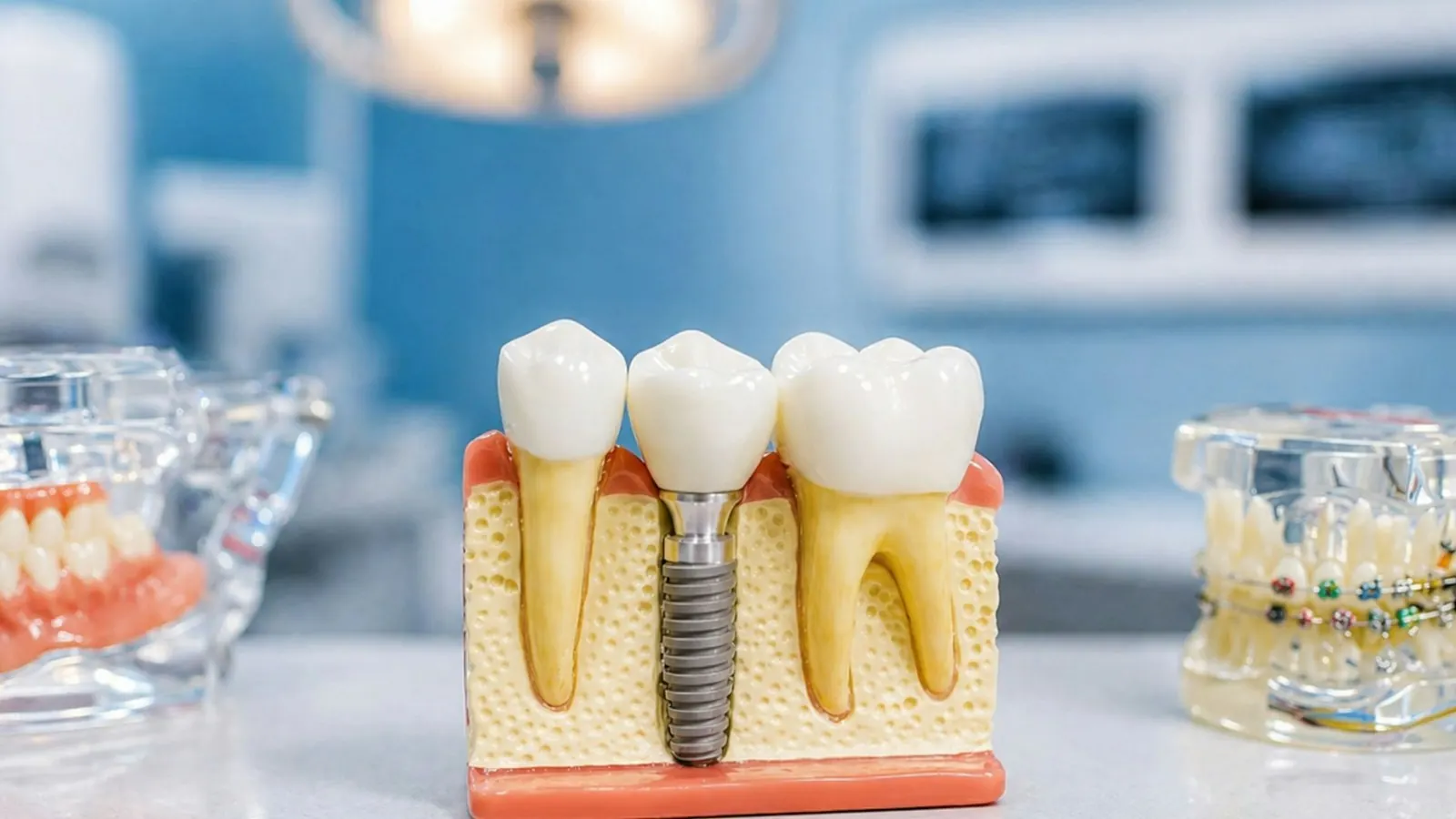
An implant has three parts: the implant itself, a small screw placed in the bone that acts as the root; the abutment, which connects the implant to the tooth; and the crown, which matches a natural tooth in shape and colour.
Implants can replace a single tooth, several teeth with an implant-supported bridge, or secure a full denture so it does not move when you eat or speak.
Implants generally suit adults whose jaw has finished growing, with healthy gums and enough bone, who can commit to daily care and follow-up. Some situations need careful assessment or preparation first:
Each plan is individual, but it usually follows these stages:
After a tooth is lost, the bone in that area gradually shrinks, especially if years have passed. If there is not enough bone height or width, the dentist adds grafting material to rebuild it, either before the implant or in the same visit.
In the upper back jaw, some people need a sinus lift to create room for the implant. Grafting is common and usually safe, but it can add a few months to treatment.
A well-cared-for implant can last many years and often a lifetime, while the crown on top may need renewing after some years of wear. The main threat is inflammation around the implant (peri-implantitis) from poor cleaning or smoking, so it needs daily brushing, cleaning around it with floss or small brushes, and regular check-ups.
A bridge replaces a missing tooth with a crown suspended between the two neighbouring teeth, which are filed down to support it. It is quicker and needs no surgery, but it means filing teeth that may be healthy, and it does not stop bone shrinking under the gap. An implant leaves neighbouring teeth untouched but takes longer and needs enough bone. Your dentist can help you compare based on your case.
The surgery is done under local anaesthetic, so you should not feel pain during it. Afterwards there is usually mild discomfort and swelling for a few days, and your dentist will advise suitable pain relief and instructions.
There is no upper age limit as long as your general health and bone allow it. In young people, treatment usually waits until the jaw has finished growing.
Allergy to titanium is very rare. However, an implant sometimes fails to fuse with the bone, which is more likely with smoking, poorly controlled diabetes and poor oral care; in that case it can often be tried again after healing.
In the first days, eat soft, lukewarm foods and avoid chewing on the implant side or very hot drinks. Follow your dentist's instructions on cleaning and rinsing.
If you have lost one or more teeth, it is better to have them assessed early, before the bone shrinks or neighbouring teeth drift into the gap. If you already have an implant, see a dentist if you notice bleeding or swelling around it, pus, pain when chewing or a loose crown, and after surgery if swelling increases after the third day or you develop a fever. You can book a consultation at Medical Care Clinics, where our dental team will assess your bone and gums and explain the suitable options and expected treatment time.
This article is general health education and does not replace a medical examination. Every case needs its own assessment by a doctor.
Every 6 months is the common average, but the right interval depends on your gums and teeth. Here is what happens in the visit and how to care for your teeth afterwards.
Read articleWhitening supervised by a dentist is safe for most people when used correctly. Learn your options, what sensitivity to expect and how to keep your results.
Read articleA Hollywood smile is not one treatment but a plan to enhance the front teeth, usually with veneers. Here are the differences between the options and what to know before you decide.
Read article