PRP for Hair and Skin: Does It Work, and Who Is It For?
Can platelet-rich plasma help hair loss or skin texture? An honest look at the evidence, who it does not suit, and what a session and aftercare involve.
Read article
Most moles are benign and stay that way for life, but melanoma, a type of skin cancer, can start in an existing mole or appear as a new one. The good news is that early detection makes treatment much easier, and checking your skin once a month using a simple rule called ABCDE helps you notice changes. Any mole that worries you should be examined by a dermatologist; a self-check does not replace a doctor.
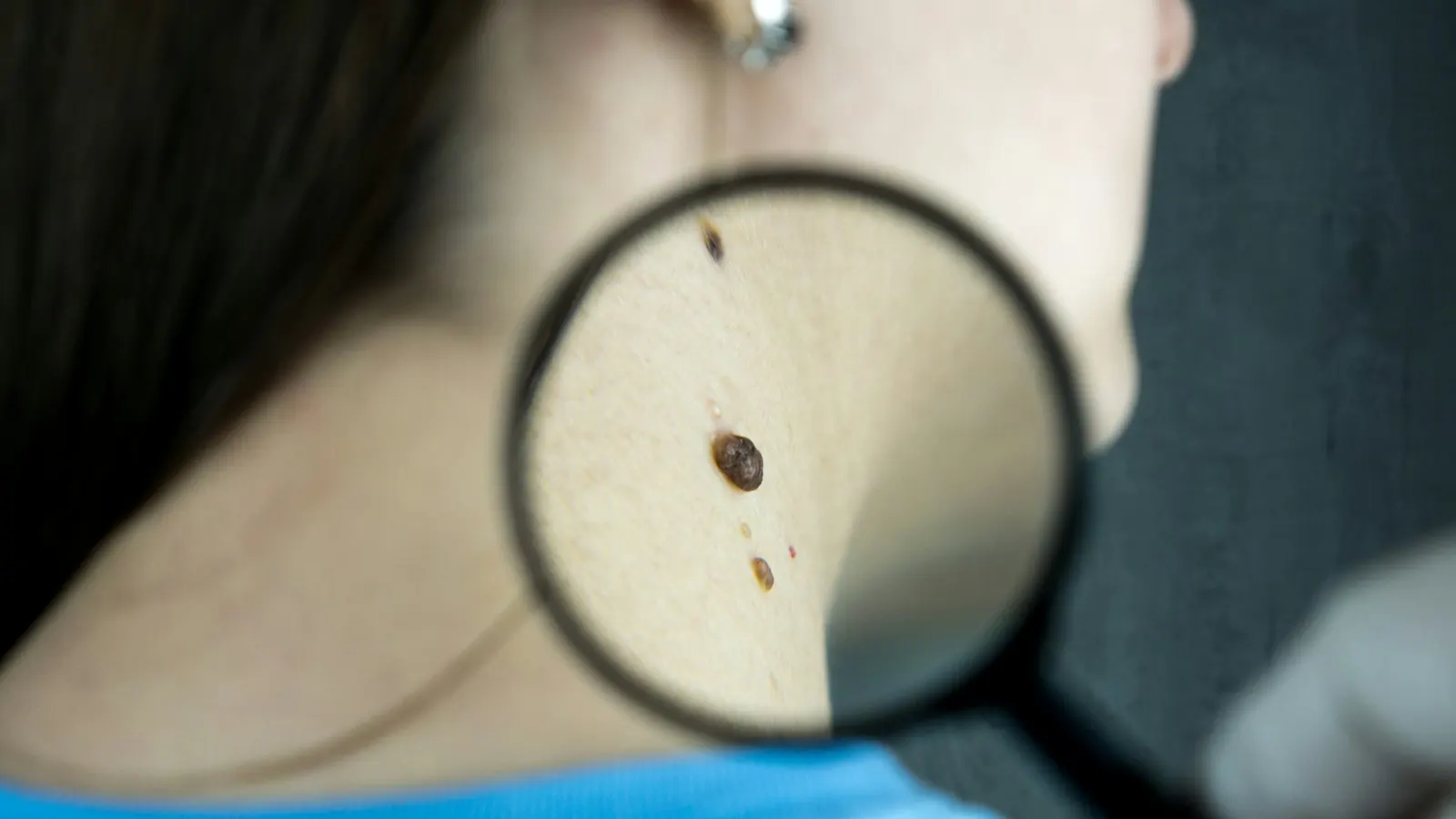
The ABCDE rule is a memory aid dermatologists use for the signs that make a mole worth checking. Each letter stands for one sign:
Not every mole with one of these signs is cancer; many benign moles are slightly irregular. But any of these signs, especially change, is reason enough to see a doctor.
Alongside ABCDE, dermatologists advise watching for the ugly duckling sign: a mole that looks different from the rest of your moles. A person's moles usually resemble each other in shape and colour, so the odd one out deserves attention even if it does not meet the ABCDE signs.
Also pay attention to new moles that appear after about age 40, because new moles become less common after that age.
Choose a fixed day each month and check your skin after a shower in a well-lit room, in front of a full-length mirror, with a hand mirror:
Photograph important moles on your phone with a small ruler beside them and compare the photos the following month. This makes changes easier to spot than relying on memory.
Skin cancer can affect anyone, but some factors raise the risk: fair skin that burns easily, many moles or unusual-looking moles, a family history of skin cancer, severe sunburns especially in childhood, use of tanning beds, and weakened immunity.
People with darker skin are generally at lower risk, but melanoma in darker skin may appear in places that get little sun, such as the soles, palms and under the nails, so do not skip these areas.
The sun in the Eastern Province is strong for most of the year, and exposure rises with Corniche and beach outings and outdoor work. Daily protection lowers skin cancer risk and helps prevent new moles and spots.
Use a broad-spectrum sunscreen with SPF 30 or higher, reapply every two hours and after swimming or sweating, avoid direct midday sun, and wear a wide-brimmed hat, sunglasses and covering clothes. Children need special care, because sunburn in childhood raises the risk later in life.
A self-check once a month is recommended. How often you see a doctor depends on your risk factors; it may be yearly for people with many moles or a family history.
Not always; a mole can be irritated by rubbing or shaving. But repeated itching or bleeding without a clear cause is a sign worth having checked by a dermatologist.
The doctor looks at it with the naked eye and usually with a dermatoscope, a lit magnifying lens that shows the mole's details painlessly. If anything looks suspicious, the doctor may suggest removing and analysing it.
Some moles may darken slightly in pregnancy because of hormones, which is common. But any mole that grows quickly or changes unevenly needs checking, and pregnancy does not prevent that.
See a dermatologist if a mole shows any ABCDE sign or looks different from your other moles, if a new mole appears after age 40, if you notice a new dark streak in a nail, if a mole bleeds, itches or ulcerates, or if a sore does not heal within 3 to 4 weeks. You can book a consultation at Medical Care Clinics in Al-Shati Al-Gharbi, Dammam, close to Al-Khobar and Dhahran, where our dermatology team will examine your moles and reassure you or advise on the next step.
This article is general health education and does not replace a medical examination. Every case needs its own assessment by a doctor.
Can platelet-rich plasma help hair loss or skin texture? An honest look at the evidence, who it does not suit, and what a session and aftercare involve.
Read articleWhy does beard hair need more sessions, and can laser help razor bumps on the neck? A guide for men on areas, sessions, preparation and side effects.
Read articleSummer humidity in the Eastern Province leaves skin shiny and sweaty, then air-conditioning dries it indoors. Here is a simple, light-layered routine that suits this changeable climate.
Read article