Laser Hair Removal for Men: Beard, Neck and Back
Why does beard hair need more sessions, and can laser help razor bumps on the neck? A guide for men on areas, sessions, preparation and side effects.
Read article
Platelet-rich plasma (PRP) is a treatment prepared from your own blood and injected into the scalp or skin to stimulate the tissue. Studies suggest it may help some people with hereditary hair loss gain hair density, but results vary and usually require a course of sessions followed by maintenance. The benefit for skin is less clear, and it does not suit everyone, so a good decision starts with diagnosing the cause of the problem first.
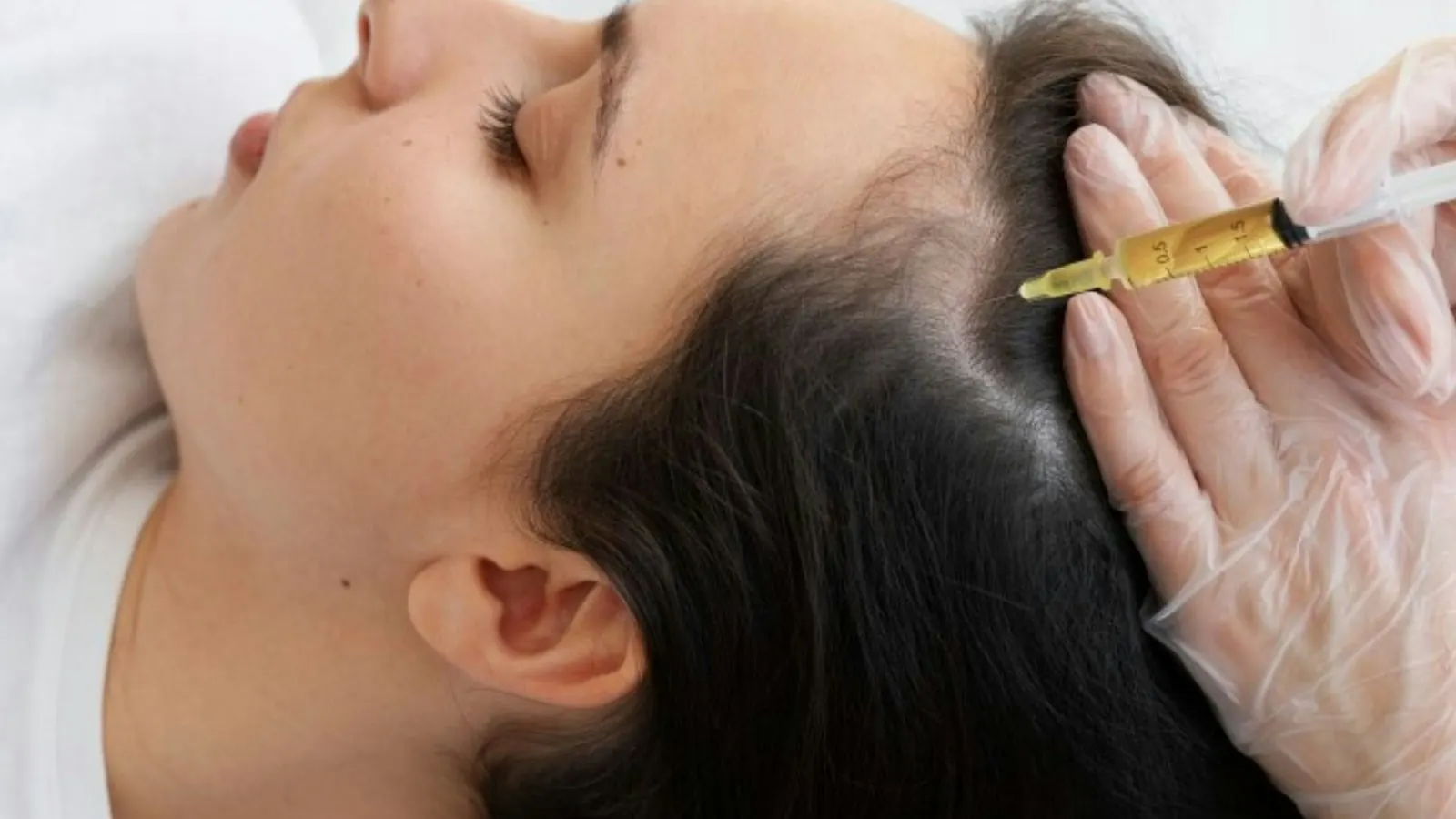
A small amount of your blood is drawn, just like a routine blood test, and placed in a centrifuge that separates its components. The portion rich in platelets is collected; platelets are small cells that carry growth factors the body normally uses to repair tissue.
This fluid is then injected with fine needles into the target area, and in skin treatments it may be combined with microneedling. Because it comes from your own blood, an allergic reaction is very unlikely, but that does not mean it is free of side effects or right for everyone.
Its most studied use is hereditary pattern hair loss (androgenetic alopecia) in men and women. Several small studies and scientific reviews suggest improved hair density and thickness in some patients, but preparation methods and the number of sessions differ between centres, and the response varies a great deal from person to person.
Treatment often starts with 3 to 4 sessions about 4 to 6 weeks apart, then maintenance sessions every 3 to 6 months depending on the response. Improvement usually takes 3 to 6 months to show and may fade if maintenance stops. The expected benefit is better in early thinning; areas that have been completely bald for years are not expected to regrow hair with PRP.
PRP is often used as a supporting treatment alongside proven options such as topical minoxidil, or prescription medicines your doctor chooses for your situation.
Not all hair loss is hereditary. Many cases are caused by a deficiency or disorder that can be treated, and PRP is no substitute for treating the cause. Your doctor will ask about your health history, examine your scalp and may order tests to look for causes such as:
PRP is also used to improve skin texture, glow and fine lines, and as a supporting treatment for acne scars together with microneedling or fractional laser. The evidence here is weaker than for hair, mostly from small studies, and the expected improvement is usually gradual and mild to moderate.
PRP is not a substitute for Botox for expression lines or for fillers to restore lost volume. If you have a specific goal, discuss with your doctor which option fits it best; another treatment may suit you better than PRP.
Your doctor decides whether the treatment suits you after reviewing your health history and medicines. It may be postponed or not recommended in situations such as:
A session usually takes 30 minutes to an hour, including drawing and preparing the blood and then injecting. The sensation varies from person to person, and cooling or a numbing cream may be used to ease discomfort. Afterwards, redness, mild swelling, small bruises or a tender scalp are normal and fade within a few days. For a better experience:
Most people feel stinging and pressure during the injections, which varies with the area and each person's tolerance. Cooling or a numbing cream helps ease the sensation.
No. Hereditary hair loss is an ongoing condition, so results usually need maintenance sessions, and the improvement may fade gradually after stopping.
It comes from your own blood, so it cannot pass on diseases from another person. But any injection carries a small risk of infection, so it must be done with sterile, single-use equipment.
Alopecia areata is an immune condition different from hereditary hair loss, and its main treatment, such as corticosteroid injections, is decided by a dermatologist. PRP is used in some cases, but the evidence for it there is weaker.
See a dermatologist if you notice sudden or heavy shedding, round bald patches, or itching, redness and scaling of the scalp, or if hair loss comes with tiredness, weight change or irregular periods. After a PRP session, see your doctor if you have increasing pain, swelling, heat or pus at the injection site. You can book a consultation at Medical Care Clinics, where our dermatology and aesthetics team will assess the cause and explain whether PRP is a suitable option for you or whether another treatment would suit you better.
This article is general health education and does not replace a medical examination. Every case needs its own assessment by a doctor.
Why does beard hair need more sessions, and can laser help razor bumps on the neck? A guide for men on areas, sessions, preparation and side effects.
Read articleSummer humidity in the Eastern Province leaves skin shiny and sweaty, then air-conditioning dries it indoors. Here is a simple, light-layered routine that suits this changeable climate.
Read articleHow many laser sessions will you need, and is it right for your skin? A practical guide to preparation, aftercare, side effects and when to wait.
Read article