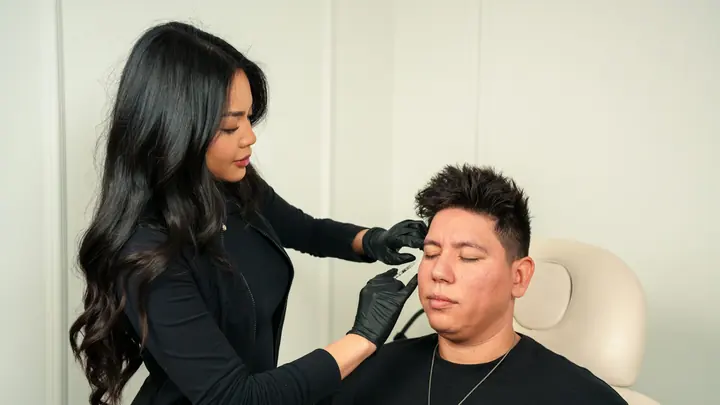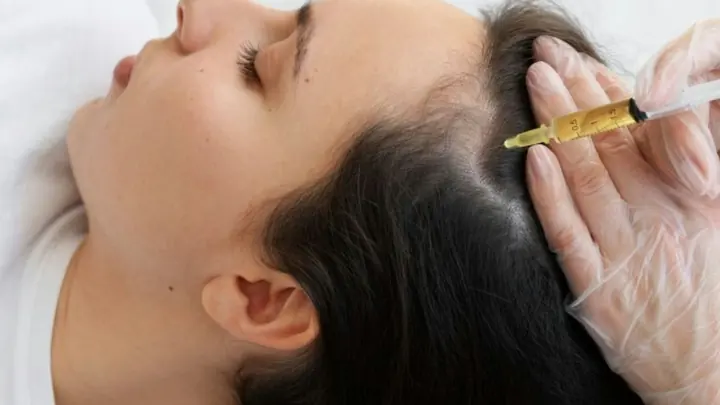
PRP for Hair and Skin: Does It Work, and Who Is It For?
Can platelet-rich plasma help hair loss or skin texture? An honest look at the evidence, who it does not suit, and what a session and aftercare involve.
Read article
Men's skin is usually thicker and oilier, but every day it faces things that wear it down: shaving, sweat, sun and long working hours outdoors or in air-conditioning. Men do not need shelves of products, just three basic steps: a gentle cleanser, a moisturiser and sunscreen, plus the right shaving technique. These simple habits reduce razor bumps and irritation and protect the skin from dark spots and early wrinkles.
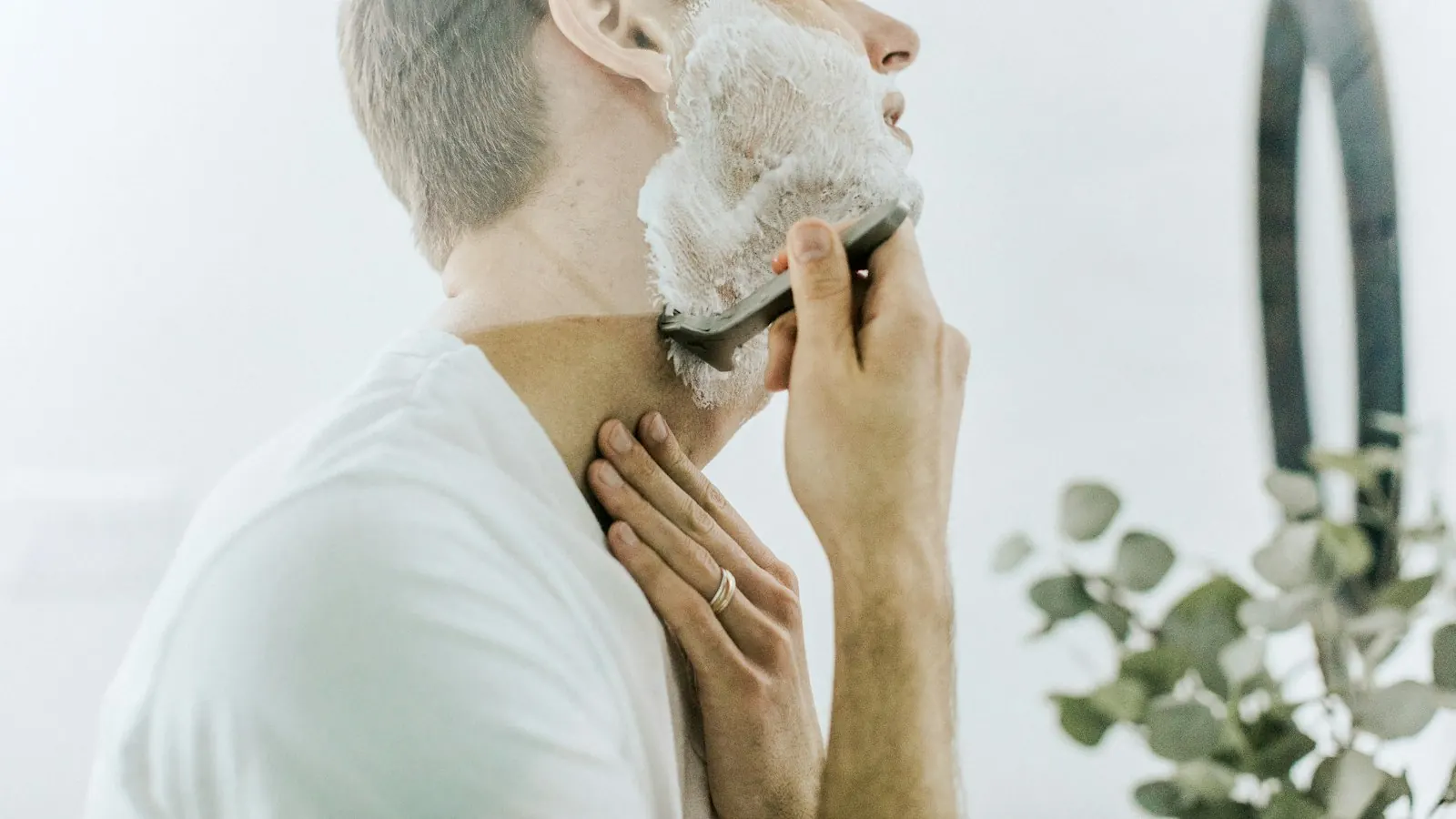
A two-minute routine is enough for most men, and it can be adjusted to your skin type:
If your skin is oily, choose gel textures; if it is dry or sensitive, choose a richer, fragrance-free moisturiser.
Razor bumps, or ingrown beard hairs (pseudofolliculitis barbae), happen when a cut hair curls back and grows into the skin, causing a red, painful bump and sometimes a pimple. They are more common in men with curly or thick hair and can leave dark marks and small scars if they keep recurring.
The most helpful steps include:
The skin under the beard needs cleaning like the rest of the face, because oil, dead cells and food residue collect there. Wash your beard with a gentle cleanser or mild shampoo, dry it well, then you can use beard oil or balm to soften the hair and ease itching.
If yellow or white flakes appear with redness and itching under the beard or around the nose and eyebrows, it may be seborrhoeic dermatitis, a common condition that improves with treatment chosen by your doctor. Note that beard oils moisturise the hair, but they have not been shown to make a beard thicker.
Many men in the Eastern Province work long hours outdoors, at sites, plants and in the field, or spend a lot of time driving. Strong sun causes dark spots and early wrinkles over the years and raises the risk of skin cancer, especially on the ears, back of the neck and backs of the hands.
A shemagh, ghutra or cap gives useful shade but is not enough on its own. Apply sunscreen to your face, ears, neck and the backs of your hands, reapply every two hours outdoors or when sweating, and drink water regularly.
Besides razor bumps, men often see a dermatologist for back and chest acne, especially with sweating and tight clothing, fungal infections in skin folds and on the feet with heat and closed shoes, and pigmentation from sun or spots.
Men who use muscle-building supplements or hormonal enhancers may notice more breakouts. Any skin problem that persists or gets worse deserves an examination rather than trying random products.
Yes. Darker skin burns less but is prone to pigmentation, dark spots and long-term sun damage. Daily sunscreen benefits every skin type.
Alcohol-rich products can sting, dry the skin and increase irritation. A gentle moisturiser after shaving is better, with an antibacterial product only if your doctor recommends it.
It can be an effective option for men with recurring razor bumps on the neck or beard line, because it reduces hair density. Your doctor will advise whether it suits your skin and hair type.
Beard density is set mainly by genetics and hormones, and there is no strong evidence that oils increase it. If your beard is very sparse or sudden round bald patches appear in it, it is better to have a dermatologist examine it than to try more products.
See a dermatologist if razor bumps keep coming back and leave dark marks or scars, if painful pimples or widespread inflammation appear in the beard area, if flaking and itching under the beard persist, if a new spot or mole on the face, ears or neck is changing, or if a sore does not heal. You can book a consultation at Medical Care Clinics in Al-Shati Al-Gharbi, Dammam, close to Al-Khobar and Dhahran, where our dermatology team will assess your skin and suggest treatment and a routine that suits your work.
This article is general health education and does not replace a medical examination. Every case needs its own assessment by a doctor.
Can platelet-rich plasma help hair loss or skin texture? An honest look at the evidence, who it does not suit, and what a session and aftercare involve.
Read articleWhy does beard hair need more sessions, and can laser help razor bumps on the neck? A guide for men on areas, sessions, preparation and side effects.
Read articleSummer humidity in the Eastern Province leaves skin shiny and sweaty, then air-conditioning dries it indoors. Here is a simple, light-layered routine that suits this changeable climate.
Read article