PRP for Hair and Skin: Does It Work, and Who Is It For?
Can platelet-rich plasma help hair loss or skin texture? An honest look at the evidence, who it does not suit, and what a session and aftercare involve.
Read article
Alopecia areata is an autoimmune condition in which the immune system attacks hair follicles, so they stop growing and smooth, round bald patches appear on the scalp, beard or eyebrows. The follicles do not die in this condition, so hair can grow back, and in mild cases it often does so on its own. Dermatologists have several treatments that can help speed up regrowth, chosen according to the extent of hair loss and the patient's age.
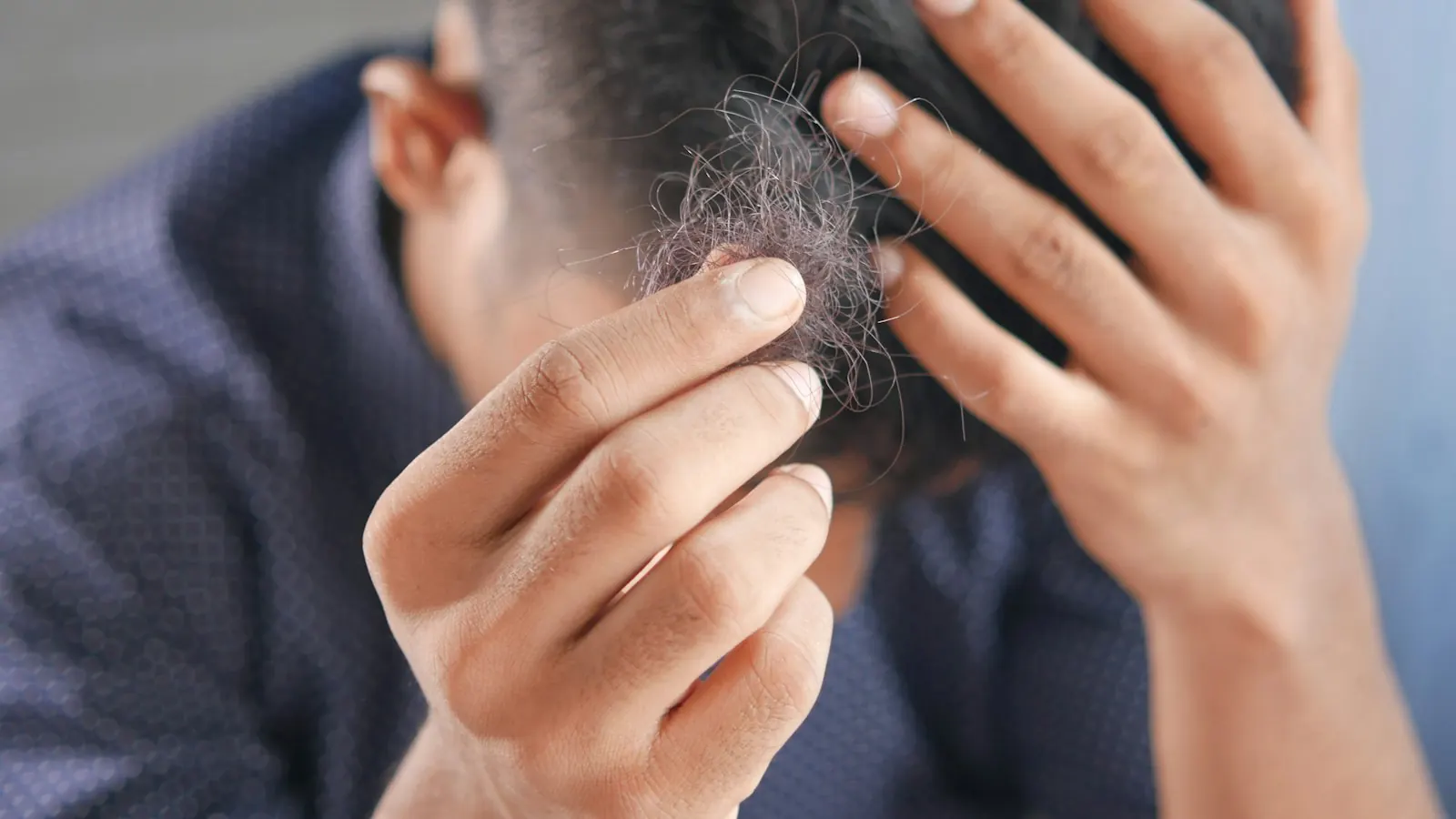
The exact cause is not fully understood, but alopecia areata happens when the immune system mistakenly attacks hair follicles. Genetics play a role: it is more common in people with relatives who have it, or who have other autoimmune conditions such as thyroid disorders and vitiligo, or allergic conditions such as asthma and eczema.
Some patients notice it after severe stress or illness, but these are possible triggers rather than the sole cause. Alopecia areata is not contagious and is not caused by poor hygiene or poor hair care.
It usually starts suddenly, and a barber or family member may notice it before the patient does. Signs include:
A dermatologist usually diagnoses alopecia areata by examination and dermatoscopy, may request blood tests for the thyroid or others depending on the case, and rarely needs a biopsy.
In mild cases with a few small patches, hair grows back on its own in many patients within months to a year. New hair may be white or light at first, then gradually regain its colour.
However, the course varies from person to person: new patches may appear while old ones recover, and episodes can recur years later. The outlook is usually less favourable when the condition starts in childhood, when hair loss is extensive, or when it involves the back and sides of the hairline.
No treatment prevents alopecia areata permanently, but treatments help hair regrow in many cases. The doctor chooses based on the extent and location of hair loss and the patient's age:
All of these treatments are prescription-only and used under a doctor's follow-up, and some are not suitable during pregnancy and breastfeeding or for children, so do not use any of them without a consultation.
Alopecia areata is usually not physically painful, but its emotional impact can be significant, especially for children, teenagers and women, or before an important occasion such as a wedding. Worry and embarrassment are natural, and talking about them with your doctor and family helps a great deal.
You can change your hairstyle or use a head covering or wig for a while, and fill in eyebrows with brow pencils. If the condition clearly affects your sleep, study, work or mood, psychological support is an important part of treatment, not a luxury.
In most cases no, because the follicles stay alive and can regrow hair. But in some patients patches recur or hair loss spreads, so follow-up with a doctor matters.
It can appear at any age, including childhood, and in children it is usually treated with gentle topical treatments. Children also need emotional support and calm handling from family and school.
Alopecia areata is an autoimmune condition, not mainly a vitamin deficiency. The doctor may check some vitamins and minerals as part of the overall assessment, but supplements without a proven deficiency do not treat it.
See a dermatologist if a bald patch appears on your scalp, beard or eyebrows, if patches increase in number or spread quickly, if alopecia appears in a child, if there is redness, scaling or pain, or if it is affecting your emotional wellbeing. Early diagnosis helps in choosing the right treatment. You can book a consultation at Medical Care Clinics in Al-Shati Al-Gharbi, Dammam, close to Al-Khobar and Dhahran, where our dermatology team will assess your condition and discuss the treatment options with you calmly and clearly.
This article is general health education and does not replace a medical examination. Every case needs its own assessment by a doctor.
Can platelet-rich plasma help hair loss or skin texture? An honest look at the evidence, who it does not suit, and what a session and aftercare involve.
Read articleWhy does beard hair need more sessions, and can laser help razor bumps on the neck? A guide for men on areas, sessions, preparation and side effects.
Read articleSummer humidity in the Eastern Province leaves skin shiny and sweaty, then air-conditioning dries it indoors. Here is a simple, light-layered routine that suits this changeable climate.
Read article