PRP for Hair and Skin: Does It Work, and Who Is It For?
Can platelet-rich plasma help hair loss or skin texture? An honest look at the evidence, who it does not suit, and what a session and aftercare involve.
Read article
Many laser treatments, especially hair removal, can continue through summer as long as you follow some precautions. The real issue is not summer itself but a recent tan and sun exposure before and after the session, because tanned skin absorbs part of the laser energy, raising the risk of burns and pigmentation. Lasers that resurface the skin, however, are often postponed by doctors to the cooler months.
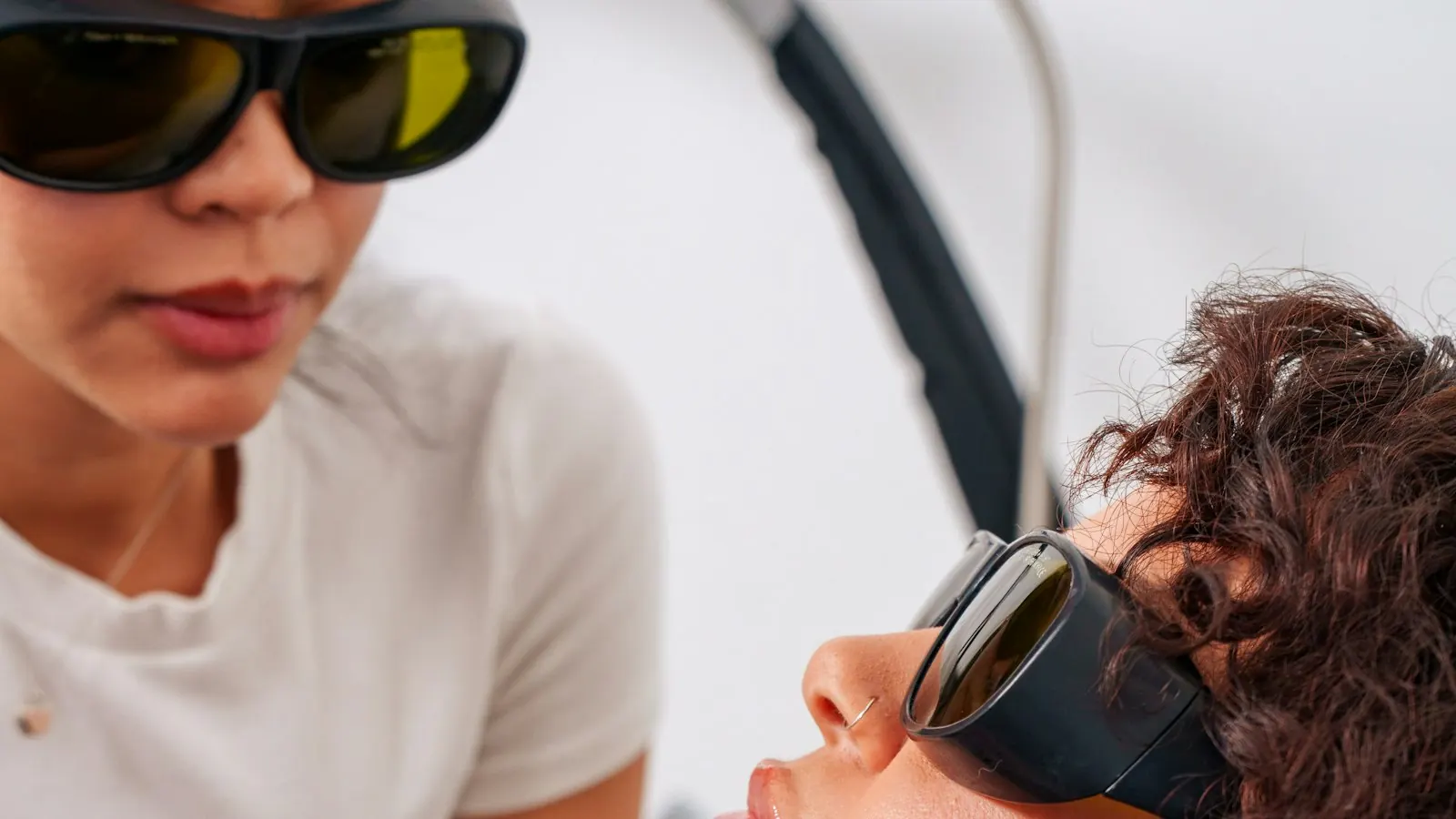
Hair removal laser targets the dark pigment in the hair root. When skin is freshly tanned, its pigment rises too, so the skin and hair compete to absorb the energy, increasing the risk of strong redness, blisters, or dark or light patches after treatment.
That is why your doctor asks about recent sun exposure and may postpone the session or lower the energy if there is a clear tan. You are usually advised to avoid sunbathing, tanning beds and self-tanning creams for several weeks before treatment, and your doctor will tell you the right interval for you.
Yes. Each device has a wavelength that suits certain skin tones. Your doctor chooses the device and settings based on your skin colour and how tanned it is on the day of treatment, not how it looks in winter:
The sun in the Eastern Province is strong, and summer humidity increases sweating and friction, which makes good preparation even more important:
After laser hair removal you may have mild redness and swelling around the hair roots for a few hours or a day. In summer especially, sweating and friction increase the chance of inflamed hair follicles, so care in the first two days matters:
If dark or light patches appear after a session, do not try to treat them with lightening creams on your own; see your doctor, as most are temporary and need sun protection and time.
Fractional, pigment and deeper resurfacing lasers make the skin sensitive to the sun for longer, and early exposure can cause stubborn pigmentation, especially in medium and darker skin. That is why many doctors prefer to schedule them in the cooler months, or to do them in summer only for people who can reliably stay out of the sun.
Melasma usually worsens in summer with sun and heat, and treating it with laser needs great caution, so your doctor may prefer other treatments at this time of year.
Not necessarily. If you avoid tanning, use sunscreen and keep treated areas covered, you can usually continue, with your doctor adjusting the device and settings.
Hair removal is possible with strict sun protection. Resurfacing and pigmentation lasers are often better postponed to the cooler months, and your doctor will decide based on your case.
Tell your doctor before the session; they may postpone it, lower the energy or do a test patch. Do not hide it, because a tan increases the risk of burns.
It is usually advised to wait at least two days before swimming, to keep direct sun off the area for two weeks, and to use sunscreen afterwards.
Contact your doctor if, after a laser session, you develop blisters, severe burning pain, crusting, inflamed bumps with pus, or dark or light patches that do not improve within a few weeks. Do not treat burns or pigmentation with home remedies. If you would like to plan laser sessions safely through the summer, you can book a consultation at Medical Care Clinics in Al-Shati Al-Gharbi, Dammam, close to Al-Khobar and Dhahran, where our dermatology team will assess your skin tone and choose the right device and timing.
This article is general health education and does not replace a medical examination. Every case needs its own assessment by a doctor.
Can platelet-rich plasma help hair loss or skin texture? An honest look at the evidence, who it does not suit, and what a session and aftercare involve.
Read articleWhy does beard hair need more sessions, and can laser help razor bumps on the neck? A guide for men on areas, sessions, preparation and side effects.
Read articleSummer humidity in the Eastern Province leaves skin shiny and sweaty, then air-conditioning dries it indoors. Here is a simple, light-layered routine that suits this changeable climate.
Read article