Floss or Water Flosser? A Guide to Cleaning Between Teeth
A toothbrush cleans the surfaces you can see but does not reach well into the spaces between teeth, where plaque gathers and much decay and gum disease begin. That is why cleaning between your teeth at least once a day is recommended. The right tool varies from person to person: floss for tight spaces, interdental brushes for wider gaps, and a water flosser as a helpful extra, especially with braces and implants. Most important is choosing a tool you will use every day.
4 min read · Last updated
Photo: Unsplash
Why is a toothbrush not enough on its own?
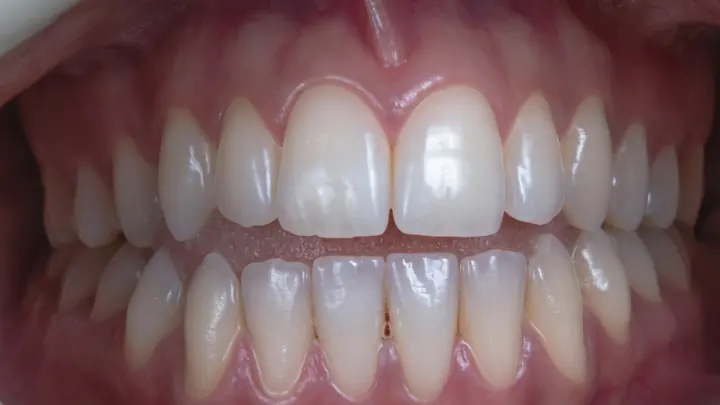
Each tooth has five surfaces, and a brush reaches only three of them well. The two surfaces touching the neighbouring teeth keep their plaque and food debris, especially after meat- and fibre-rich meals that lodge between teeth.
Over time this plaque causes decay between teeth that cannot be seen by eye, and gum inflammation between teeth that shows as bleeding when cleaning and bad breath. Cleaning these spaces every day clearly reduces both.
Dental floss: who is it for, and how is it used?
Floss suits tightly packed teeth and narrow spaces that an interdental brush cannot enter. It comes waxed, which glides easily, as wider tape, and as ready-made floss picks for people who find two-handed flossing difficult. The right technique:
Take about 40 cm of floss and wind it around your two middle fingers.
Ease it between the teeth with a gentle zigzag motion, without snapping it onto the gum.
Curve it into a C shape around the side of the tooth and move it gently up and down, slightly below the gumline.
Repeat on the neighbouring tooth, then move to a clean section of floss.
Do not forget the back surface of the last molar on each side.
Interdental brushes: when are they better than floss?
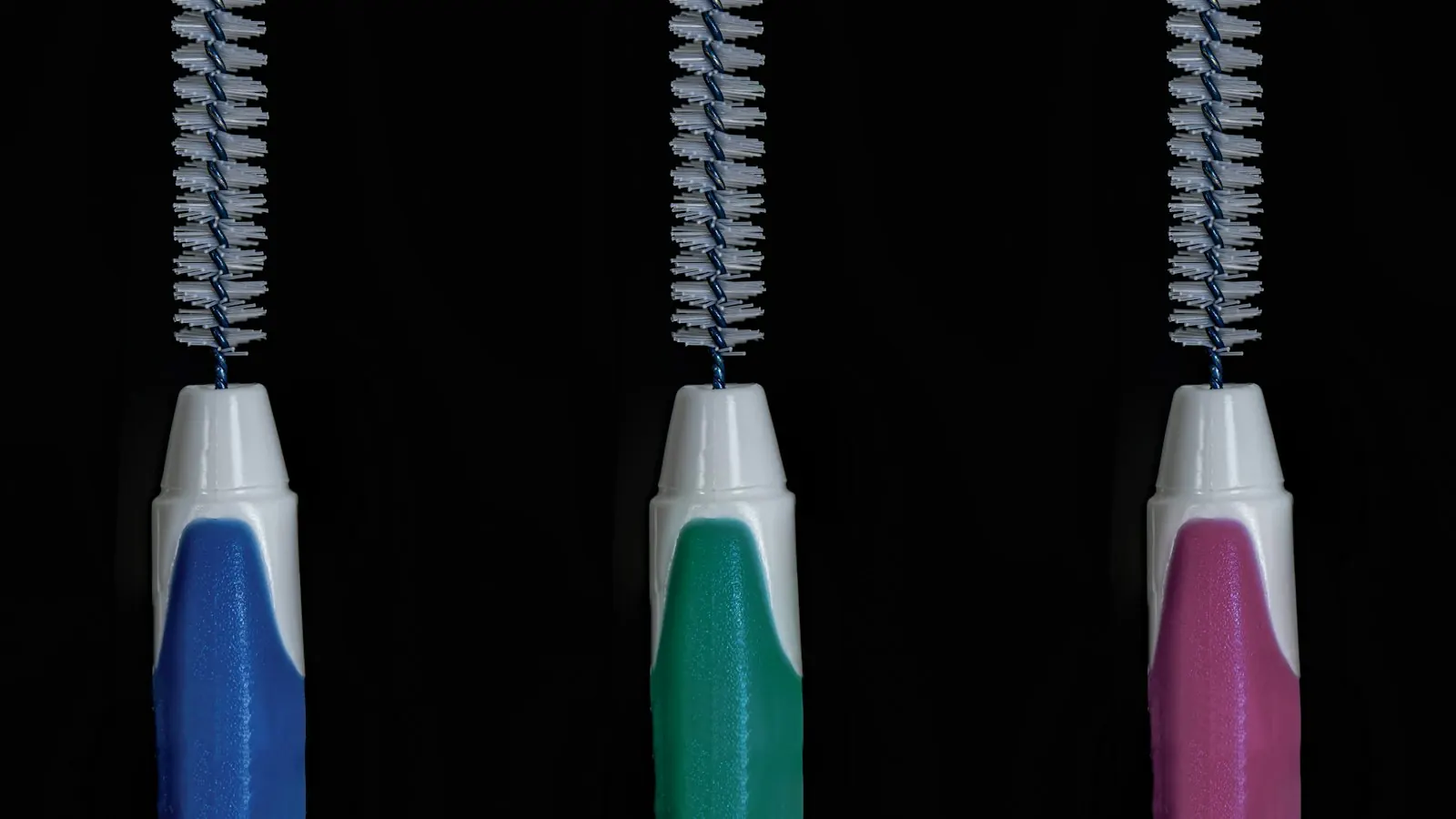
An interdental brush is a small cylindrical or tapered brush that fits between teeth. Research suggests it may clean better than floss in spaces wide enough for it, and many people find it easier to use. It is particularly suited to people with gum recession, gaps between teeth, bridges, or after treatment for periodontitis.
Brushes come in different sizes, and you may need more than one size in the same mouth. Choose the size that slides in gently without force and fills the space, and never push it in. Your dentist or dental hygienist can work out the right sizes for you.
Water flossers: can they replace floss?
A water flosser directs a pulsing stream of water between the teeth and around the gums. It is useful for people with fixed braces, implants or bridges and for those who struggle with floss because of limited dexterity, and many people find it comfortable.
However, it may not remove firmly stuck plaque as well as mechanical cleaning with floss or interdental brushes in every case. Many dentists therefore see it as a good additional tool, and for some people it may be enough on its own depending on their gum health. Ask your dentist what suits you, and start on the lowest pressure, increasing it gradually.
What about braces, implants and bridges?
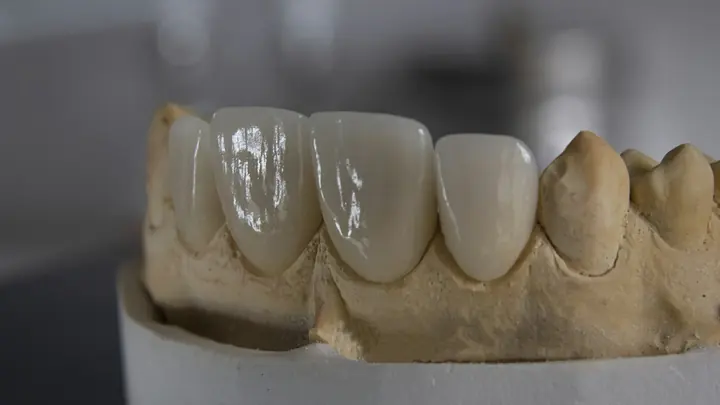
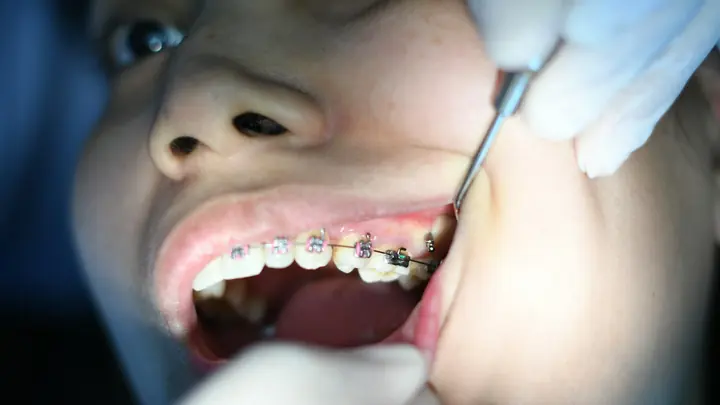
These need special care, because plaque builds up around wires and brackets and under bridges:
Fixed braces: small interdental brushes around the brackets, floss with a threader or stiff-ended floss to pass under the wire, and a water flosser as a useful extra.
Dental implants: interdental brushes with plastic-coated wire, or special spongy floss, to avoid scratching the implant surface.
Bridges: stiff-ended floss or a threader to clean under the false tooth.
Children: start cleaning between their teeth once the teeth touch, with a parent's help and small floss picks.
Frequently asked questions
Should I clean between my teeth before or after brushing?
Either is fine; what matters is doing it daily. Some dentists prefer cleaning before brushing, so the toothpaste's fluoride can reach between the teeth once the plaque is cleared.
Does flossing widen the gaps between teeth?
No. Correct flossing does not create gaps. Spaces may look more obvious once swollen, inflamed gums settle, which is a sign the gums are improving, not of damage.
My gums bleed when I floss. Should I stop?
Do not stop. Bleeding is usually a sign of gum inflammation, which improves with regular cleaning over a few days to about two weeks. If it continues after that, see your dentist.
Is a wooden toothpick a good alternative?
It can help remove food when needed if used gently, but it does not clean plaque between teeth as floss or interdental brushes do, and rough use can injure the gums.
When to see a doctor
See your dentist if your gums keep bleeding for more than two weeks despite regular cleaning, food always gets stuck in the same spot, you feel pain or sensitivity between two teeth, or floss keeps shredding at one tooth, which may point to decay or a rough filling edge. If you have braces, implants or a bridge, ask your dentist to show you the right cleaning tools and sizes. You can book an appointment at Medical Care Clinics in Al-Shati Al-Gharbi, Dammam, close to Al-Khobar and Dhahran, where our dental team will check your gums and help you choose the most suitable cleaning tools.
A crown is a cap that covers the whole tooth to protect it and restore its shape. Learn how zirconia, E.max and porcelain-fused-to-metal differ, and where each fits in the mouth.
If your teeth look longer than before or have become sensitive to cold, your gums may be receding. Learn the causes, the treatments and how to stop recession progressing.
Teeth can move at any age as long as the gums and bone are healthy. Learn what differs in adult orthodontics, the checks needed before starting, and how treatment fits into daily life.