Gum Recession: Causes, Signs and Treatment Options
If your teeth look longer than before or have become sensitive to cold, your gums may be receding. Learn the causes, the treatments and how to stop recession progressing.
Read article
A crown, or cap, is a custom-made cover that surrounds a tooth on all sides, used when a tooth has become too weak to hold a filling. No single material is best for everyone: zirconia stands out for strength and usually suits back teeth, E.max stands out for its natural translucency and usually suits front teeth, and porcelain-fused-to-metal is an older, well-proven option that still has its place. Your dentist chooses based on the tooth's position, your bite force and how much of the tooth remains.
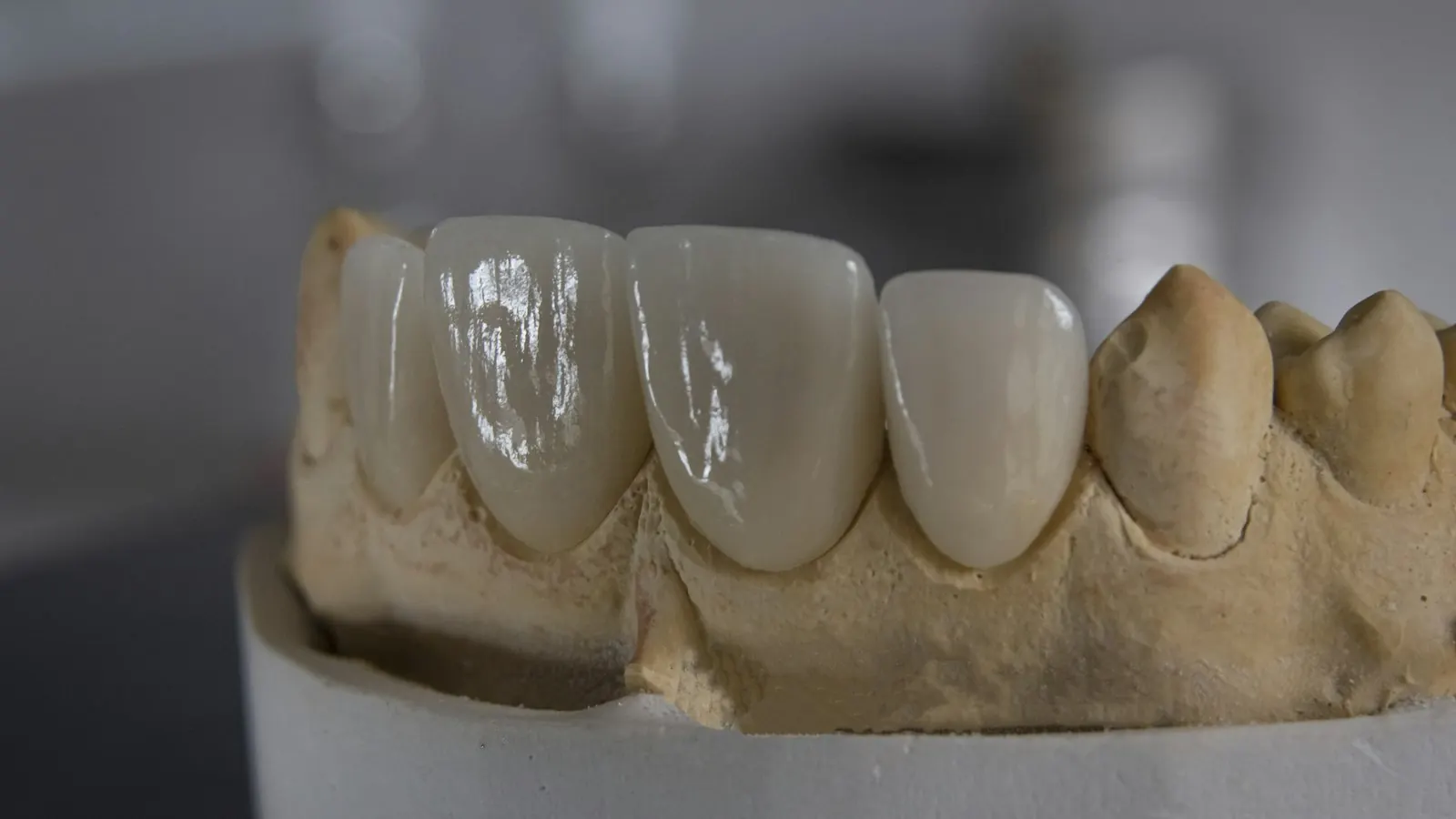
A filling is enough when a large, healthy part of the tooth remains. A veneer is a thin shell covering only the front surface, mostly used to improve the look of healthy front teeth. A crown is usually preferred in cases such as:
All three are well-established, safe options; they differ in strength, appearance and how much tooth must be reduced:
A crown usually takes two visits about one to two weeks apart, though this varies with the case and how the crown is made:
Crowns are commonly said to last around 10 to 15 years on average, and they may last longer or shorter depending on care, bite force, grinding and the material. What most often ends a crown's life is not breakage but decay at its edge under the gum, or gum inflammation around it.
So brush twice a day with fluoride toothpaste, clean between your teeth with floss or small interdental brushes, and have regular check-ups. If you clench at night, ask about a night guard, and avoid crunching ice, date stones or nut shells with your teeth.
Many ideas about crowns circulate, and some lead to poor decisions:
The tooth is shaped under local anaesthetic, so you should not feel pain during it. You may have mild sensitivity or gum soreness for a few days after fitting, which usually fades gradually.
A Hollywood smile usually relies on thin veneers covering the front of the teeth to improve their look, while a crown covers the whole tooth, needs more reduction and is used when a tooth is weak or damaged.
A crown can occasionally loosen because of decay underneath, weakened cement or very sticky food. Keep it, do not try to glue it back yourself, and see your dentist as soon as possible.
Modern ceramic crowns can look very much like natural teeth, especially E.max on front teeth. This depends on shade matching, the quality of the lab work and healthy gums around the crown.
See a dentist if you have a broken back tooth or a large filling that is breaking, sharp pain when biting that may point to a crack, or a root-canal-treated back tooth that has not yet been covered. If you already have a crown, come in if it moves, or if you notice pain, swelling or an odour around it, or its edge becomes exposed at the gum. You can book a consultation at Medical Care Clinics, where our dental team will examine the tooth and your bite and explain the most suitable material for your case.
This article is general health education and does not replace a medical examination. Every case needs its own assessment by a doctor.
If your teeth look longer than before or have become sensitive to cold, your gums may be receding. Learn the causes, the treatments and how to stop recession progressing.
Read articleTeeth can move at any age as long as the gums and bone are healthy. Learn what differs in adult orthodontics, the checks needed before starting, and how treatment fits into daily life.
Read articleThere is no fixed number of veneers that suits everyone. Learn the factors your dentist assesses to decide how many you need and which type suits your teeth.
Read article