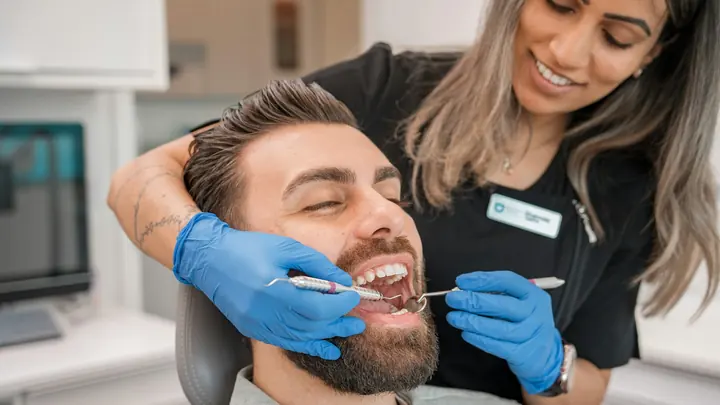
How Often Should You Get a Dental Check-up and Cleaning?
Every 6 months is the common average, but the right interval depends on your gums and teeth. Here is what happens in the visit and how to care for your teeth afterwards.
Read article
In a dental emergency, what you do in the first minutes can decide the fate of a tooth. A permanent tooth that has been knocked out can sometimes be saved if it is put back or stored correctly and you reach a dentist quickly. Some situations, such as facial swelling with difficulty breathing or swallowing, need a hospital emergency department straight away.

If a permanent tooth is knocked out by a fall or blow, the chance of saving it is better the sooner it is put back, ideally within less than an hour. Follow these steps:
A knocked-out baby tooth should not be put back, as this can damage the permanent tooth developing underneath. Press on the bleeding area with clean gauze and see a dentist to check for any other injury to the mouth or nearby teeth.
Do not keep the tooth inside a young child's mouth, as they could swallow it or choke.
If part of a tooth breaks off, keep the fragment in milk or water, as the dentist can sometimes bond it back. Rinse your mouth with warm water, use a cold compress on the cheek if there is swelling, and avoid chewing on that side.
If you see a pink or red dot in the middle of the break, or the pain is severe, the nerve may be exposed and you need an urgent same-day visit. A small chip on the edge needs an appointment within a few days.
Severe, constant pain, especially if it throbs or wakes you at night, usually points to nerve inflammation or an abscess, and painkillers alone will not fix it. Until you reach a dentist you can:
A lost filling or crown is usually not a serious emergency, but it needs a prompt appointment so the tooth does not break or decay. Keep the crown in a clean container and bring it with you, avoid chewing on that side, and keep the area gently clean.
Pharmacies may sell temporary dental filling material or cement that can be used for a short time. Never use household glue to stick a crown back on.
Facial swelling from a dental abscess can spread, and some injuries go beyond the teeth. Go to the nearest emergency department or call the Saudi Red Crescent on 997 if you have:
Warm compresses are not advised for facial swelling from an abscess, as they may help the infection spread. You can use a cold compress on and off, but the key is to see a dentist quickly.
The chances fall over time, especially if the tooth has dried out, but do not give up. Store the tooth correctly and go to the dentist, who will decide whether putting it back is still possible.
Problems with the teeth themselves, such as a knocked-out or broken tooth or severe pain, are treated by a dentist. Difficulty breathing or swallowing, spreading swelling, or head and jaw injuries belong in hospital emergency first.
See a dentist the same day if a permanent tooth is knocked out or loosened, a tooth breaks with severe pain or a red dot in its centre, or you have severe pain that will not settle or swelling in the gum. Arrange a prompt appointment if a filling or crown falls out. Remember that swelling with difficulty breathing or swallowing belongs in hospital emergency. You can contact Medical Care Clinics to book the earliest available appointment, and our dental team will assess your situation and provide the right treatment.
This article is general health education and does not replace a medical examination. Every case needs its own assessment by a doctor.
Every 6 months is the common average, but the right interval depends on your gums and teeth. Here is what happens in the visit and how to care for your teeth afterwards.
Read articleWhitening supervised by a dentist is safe for most people when used correctly. Learn your options, what sensitivity to expect and how to keep your results.
Read articleA Hollywood smile is not one treatment but a plan to enhance the front teeth, usually with veneers. Here are the differences between the options and what to know before you decide.
Read article