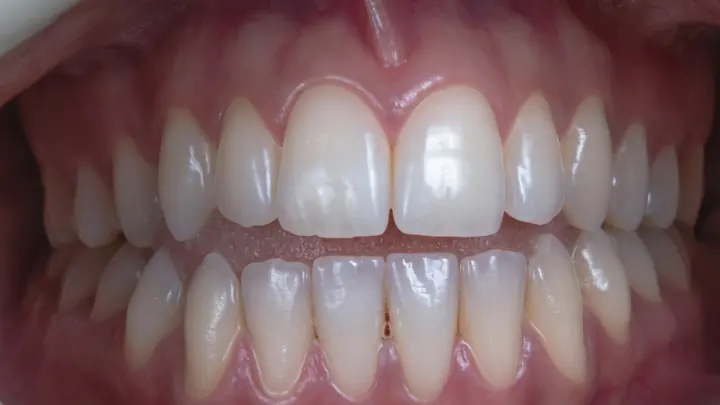
A gummy smile is when a noticeable band of gum shows above the upper teeth as you smile; many dentists consider it noticeable when more than about 3 to 4 mm of gum shows. It is not a disease and is mostly a cosmetic concern, but it has several possible causes. What matters is that treatment depends on the cause: it may be as simple as reshaping the gum line, or it may need orthodontics or a larger procedure.
4 min read · Last updated
Photo: Unsplash
What causes a gummy smile?
There is no single cause, and more than one can be present in the same person. The main ones are:
Gum covering a large part of the tooth: the teeth look short and square even though their true length is normal. This is a common cause.
Overactive upper lip muscles: the lip lifts higher than usual when you smile.
A short upper lip that does not cover the gums as much as usual.
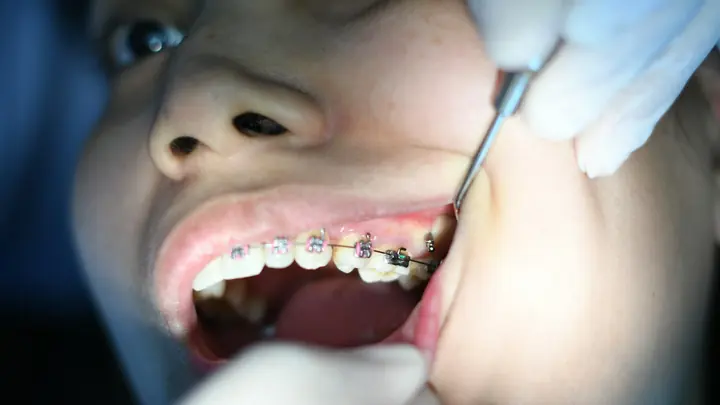
Front teeth that are protruding or have over-erupted, which can often be corrected with braces.
Excess vertical growth of the upper jaw: a less common skeletal cause that needs careful assessment.
Gum overgrowth caused by inflammation or certain medicines: here treatment starts with the health problem.
How does the dentist find the cause in your case?
Your dentist examines your smile at rest and when you laugh, and measures the length and width of the teeth, how much gum shows, and the length and movement of your lip. They may measure the depth of the gum around the teeth and take an X-ray to see where the bone sits under the gum. Photos also help with planning and discussing the options with you.
This step matters more than the treatment itself, because treating the wrong cause does not give a convincing result. For example, trimming the gum alone does not help if the main cause is an overactive lip, and injections do not help if the gum covers much of the tooth.
What are the treatment options?
Your dentist chooses one treatment, or a combination, based on the cause, how marked it is and what you want:
Gum contouring: removing excess gum and reshaping its edges with a laser or fine surgical instruments under local anaesthetic. Sometimes a small adjustment of the bone under the gum is needed so the result stays stable.
Orthodontics: suitable when the cause lies in the position of the teeth, sometimes with small orthodontic mini-screws to move the front teeth up to a better level.
Botox injections into the upper lip muscle: a non-surgical option that reduces how high the lip lifts. It is decided by the doctor after assessment, and the effect is temporary, usually lasting 3 to 6 months.
Lip repositioning: a limited surgical procedure that reduces lip elevation, chosen for selected cases after detailed discussion.
Jaw surgery: considered only when there is a clear skeletal cause in the jaw bone, and planned jointly by orthodontic and oral and maxillofacial specialists.
How does a gummy smile relate to veneers and a Hollywood smile?
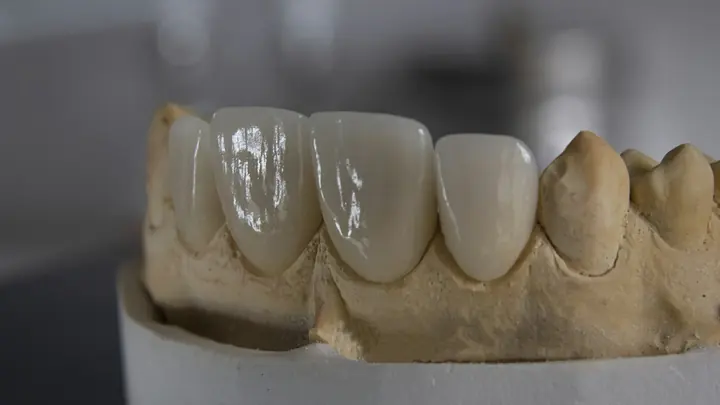
When teeth look short because of the gum, placing veneers on them straight away can make them look wide and out of proportion. So in many cases the dentist reshapes the gum first, waits several weeks for it to heal and settle, and then designs the veneers with a more natural length and ratio.
In other cases, gum contouring alone is enough: the teeth show their true length without any veneers. Ask your dentist about this option before deciding to cover healthy teeth.
What can you expect after gum contouring?
The procedure is usually done in one visit under local anaesthetic. Afterwards you may have mild soreness or sensitivity for a few days, and your dentist will advise what to take for it. Soft food is usually recommended, avoiding spicy and very hot food in the first days, and brushing gently around the area as instructed.
The gum heals initially in about one to two weeks, but its final shape takes longer to settle. Results vary between people depending on the gum type and the bone beneath, and in some cases the gum can creep back slightly over time, especially if the bone was not adjusted when needed.
Frequently asked questions
Is a gummy smile a health problem?
Usually not; it is mainly cosmetic. But if it is caused by gum overgrowth or inflammation, there is a health issue that needs treatment before any cosmetic procedure.
Does laser gum contouring hurt?
It is done under local anaesthetic, and most patients feel mild discomfort for a few days afterwards that can be managed with painkillers recommended by the dentist. Experiences vary from person to person.
Does the gum grow back after contouring?
Slight regrowth can happen in some cases, especially if the bone sits very close to the gum edge and was not adjusted. Proper planning reduces this risk.
Is treatment suitable for teenagers?
In the teenage years the gum may still be moving up naturally as the teeth finish erupting, so the dentist often prefers to wait, or to start with braces if needed.
When to see a doctor
See a dentist if your gummy smile bothers you or makes you avoid smiling, or if you notice your gums becoming larger, redder or bleeding easily, or changing after starting a new medicine. The first visit is only an assessment and does not commit you to any treatment. You can book a consultation at Medical Care Clinics in Al-Shati Al-Gharbi, Dammam, close to Al-Khobar and Dhahran, where our dental team will identify the cause and explain the options that suit you.
A crown is a cap that covers the whole tooth to protect it and restore its shape. Learn how zirconia, E.max and porcelain-fused-to-metal differ, and where each fits in the mouth.
If your teeth look longer than before or have become sensitive to cold, your gums may be receding. Learn the causes, the treatments and how to stop recession progressing.
Teeth can move at any age as long as the gums and bone are healthy. Learn what differs in adult orthodontics, the checks needed before starting, and how treatment fits into daily life.