Dark Gums: Causes and Can They Be Lightened by Laser?
Dark or brown gums are, in most cases, completely normal. The cause is melanin, the same pigment that gives skin its colour, which is why darker gums are common in people with olive or darker skin. They can be lightened for cosmetic reasons with a relatively simple procedure, most often by laser. But a new or changing dark spot is different from general pigmentation and needs checking before any cosmetic treatment is considered.
4 min read · Last updated
Photo: Unsplash
Why do gums become dark?
Gum colour varies from person to person just as skin colour does, and dark colour alone is not a sign of disease. The most common causes are:
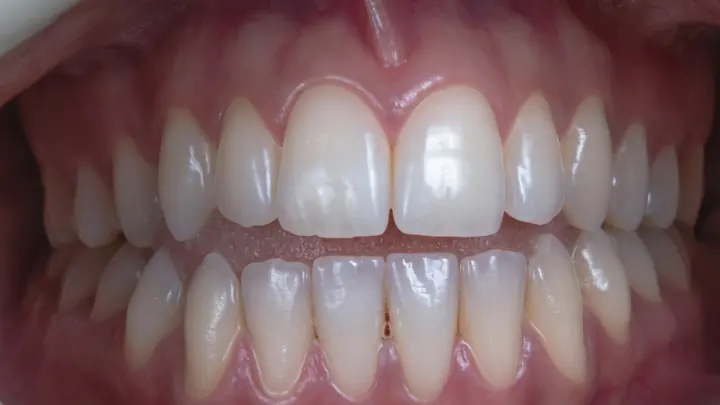
Natural inherited pigment: the most common cause. It usually appears from childhood, is symmetrical on both sides, and often looks like a brown band on the front gums.
Smoking: it stimulates pigment cells in the gums, making them darker. This includes cigarettes and shisha, and the pigment often fades gradually after quitting.
Some medicines: such as certain antimalarial drugs and some antibiotics used over long periods.
Traces of silver amalgam fillings: these can leave a small blue-grey spot near a filling or an extraction site, and it is usually harmless.
Rare general causes: such as some adrenal gland disorders, which usually come with other symptoms in the body.
When is a dark spot a concern?
Normal pigmentation is usually long-standing, widespread, symmetrical and unchanging. A spot that needs checking is one that breaks this pattern. Melanoma inside the mouth is very rare, but early detection matters, so do not ignore these signs:
A new dark spot that appears in adulthood without a clear reason.
A spot that grows or changes colour or shape over time.
A raised spot, or one with irregular edges or several colours.
A spot that bleeds or ulcerates without injury.
A spot on the palate or in one place only, rather than spread out as usual.
How are gums lightened?
Gum depigmentation means removing the thin surface layer of the gum that holds the pigment, so the gum heals with a new, lighter layer. It is done under local anaesthetic, usually in one session per jaw or for both jaws depending on the case. Methods include:
Laser: the most widely used method today, with less bleeding and precise control, and most patients feel only limited discomfort afterwards.
Surgical scraping with a scalpel: an effective traditional method, though it may involve more bleeding during the procedure.
Other methods such as freezing: used less often; your dentist chooses the best option based on the thickness and condition of your gums.
Is gum lightening right for me, and how long does it last?
Dentists usually require the gums to be healthy and free of inflammation, and the cause of pigmentation to be known and not worrying. So treatment starts with an examination and a scale and clean if needed. The procedure may be postponed or adjusted for people with very thin gums, conditions that affect wound healing such as poorly controlled diabetes, and during pregnancy.
The result usually lasts for years, but some pigment can return over time in some people, and this varies from person to person. Smoking makes it more likely to return, so quitting is part of keeping the result. If pigment returns, the session can be repeated after assessment.
What can you expect after the session?
In the first days the gum looks white or light grey, which is a normal part of healing, and the new colour shows within about one to two weeks. You may have sensitivity or mild soreness for several days, and your dentist will advise what helps.
Soft, lukewarm food is usually recommended, avoiding spicy and acidic food and very hot drinks such as coffee and tea in the first days, brushing very gently around the area, and avoiding smoking as much as possible, since it slows healing and makes the colour more likely to return.
Frequently asked questions
Is laser gum lightening painful?
It is done under local anaesthetic, and most patients feel mild discomfort for a few days afterwards. How much you feel varies from person to person.
Does lightening affect the health of my gums or teeth?
When done on healthy gums with the right technique, it is superficial and does not touch the bone or tooth roots. That is why any inflammation is treated first.
Can I lighten my gums at home?
There is no safe and effective home method for removing pigment from the gums. Acidic or bleaching products can burn the gum and may hide a sign that needs checking.
When will I see the final result?
The new colour usually shows within one to two weeks, and the gum fully settles within a few weeks after that.
When to see a doctor
See a dentist without delay if a new dark spot appears on your gums or palate, or if a spot grows, changes colour or shape, bleeds or becomes raised. If the colour of your gums only bothers you cosmetically, an examination will identify the cause of the pigmentation and whether lightening suits you. You can book a consultation at Medical Care Clinics in Al-Shati Al-Gharbi, Dammam, close to Al-Khobar and Dhahran, where our dental team will examine your gums and explain the right option for you.
A crown is a cap that covers the whole tooth to protect it and restore its shape. Learn how zirconia, E.max and porcelain-fused-to-metal differ, and where each fits in the mouth.
If your teeth look longer than before or have become sensitive to cold, your gums may be receding. Learn the causes, the treatments and how to stop recession progressing.
Teeth can move at any age as long as the gums and bone are healthy. Learn what differs in adult orthodontics, the checks needed before starting, and how treatment fits into daily life.