Dental X-Rays: Are They Safe, and When Is a CBCT Scan Needed?
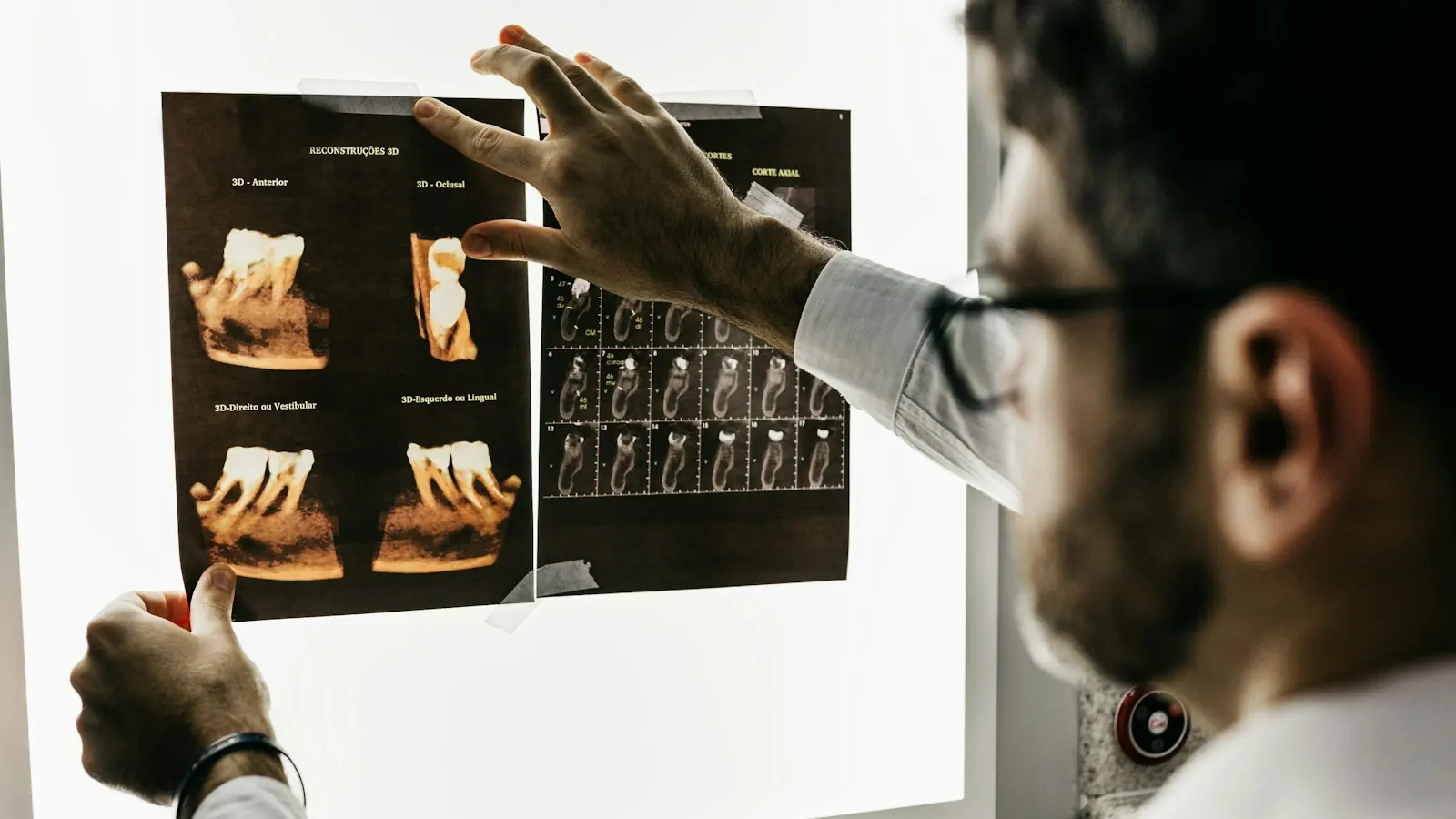
Dental X-rays are among the lowest-dose medical imaging tests and are considered safe when your dentist orders them for a clear reason and uses the lowest dose that does the job. They reveal decay between teeth, infection at the root tips, bone loss around teeth and buried teeth, none of which can be seen by eye. A 3D cone beam CT scan uses a higher dose than standard images, so it is reserved for specific situations such as implant planning or assessing a wisdom tooth close to the nerve.
4 min read · Last updated
Photo: Unsplash
Why does a dentist need X-rays?
An examination by eye shows only the surfaces of the teeth and gums, while many problems start in hidden places. X-rays help your dentist find them early, when treatment is simpler and less demanding for the tooth and for you.
Examples of what they show include decay between teeth and under old fillings, abscesses and infection at the root tips, bone loss from gum disease, unerupted or impacted teeth, cysts and some other changes in the jawbone, and how children's teeth are developing.
What types of dental X-ray are there?
Your dentist chooses the type of image according to the question it needs to answer:
Bitewing: shows the crowns of the upper and lower back teeth together and is the best image for spotting decay between teeth.
Periapical: shows the whole tooth from crown to root tip and is used to diagnose pain, abscesses and for root canal treatment.
Panoramic (OPG): a single image of both jaws and all the teeth, useful for wisdom teeth and general assessment.
Cephalometric: a side view of the head, mostly used in orthodontic planning.
Cone beam CT (CBCT): a 3D image of the bone and teeth, ordered for specific situations.
Are dental X-rays safe?
The dose from standard dental images is very low and is often compared with the natural background radiation a person receives from the environment over a day or a few days. Modern digital equipment reduces the dose further and aims the beam precisely at a small area of the mouth.
Even so, the medical principle stays the same: no X-ray without a reason, and the lowest dose that allows a diagnosis. That is why dentists do not take images on a fixed schedule for everyone, but according to your age and your risk of decay and gum disease. A thyroid collar or apron may be used depending on the type of image and current guidance.
It helps to bring recent X-rays from any previous clinic to avoid repeating images unnecessarily.
When is a 3D cone beam CT scan needed?
A cone beam CT scan gives an accurate 3D picture that standard images cannot, but its dose is higher than theirs, though usually lower than a medical CT scan in hospital. It is therefore ordered when its result will genuinely change the treatment decision, for example:
Planning dental implants, to measure bone width and height and locate the nerve and sinuses.
An impacted wisdom tooth that looks close to the lower jaw nerve on a panoramic image.
Complex root canal treatment, or looking for an extra canal or a root fracture.
Assessing cysts and other changes in the jawbone.
Some complex orthodontic cases and impacted teeth such as canines.
What about pregnancy and children?
If you are pregnant or might be, tell your dentist before any X-ray. Non-essential images are usually postponed until after the birth, but if there is pain or infection that needs diagnosing, the necessary image can be taken with precautions, as leaving an infection untreated can be riskier.
Children are more sensitive to radiation than adults, so the dose is adjusted for age and images are taken only when needed, such as suspected decay between teeth, checking permanent teeth coming through or after an injury.
Frequently asked questions
How often can I have dental X-rays?
There is no single schedule for everyone; your dentist decides based on your age, the condition of your teeth and your risk of decay. Someone with frequent decay may need images more often than someone whose teeth have been healthy for years.
Can I have dental X-rays while breastfeeding?
Yes. Dental X-rays do not affect breast milk, and there is no need to stop breastfeeding afterwards.
Why not just take a panoramic image instead of small X-rays?
A panoramic image gives an overview of both jaws but is less precise for small decay between teeth and root detail. Your dentist may combine both types as needed.
Do I need a CBCT scan before every implant?
It is commonly used in implant planning because it shows the bone and nerve in three dimensions, and your dentist decides whether you need one based on the implant site and the bone.
When to see a doctor
Keep up regular dental check-ups even if nothing hurts, since much of the decay between teeth and many root problems only show on X-rays. Go sooner if you have pain when biting, gum swelling or lingering sensitivity, or if you are planning implants or orthodontic treatment. If you have previous images or are pregnant, tell your dentist at the start of the visit. You can book an appointment at Medical Care Clinics in Al-Shati Al-Gharbi, Dammam, close to Al-Khobar and Dhahran, where our dental team will decide which images you actually need and explain the results to you.
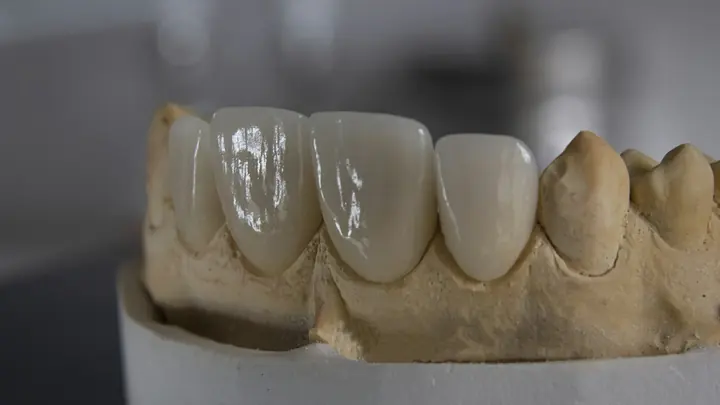
A crown is a cap that covers the whole tooth to protect it and restore its shape. Learn how zirconia, E.max and porcelain-fused-to-metal differ, and where each fits in the mouth.
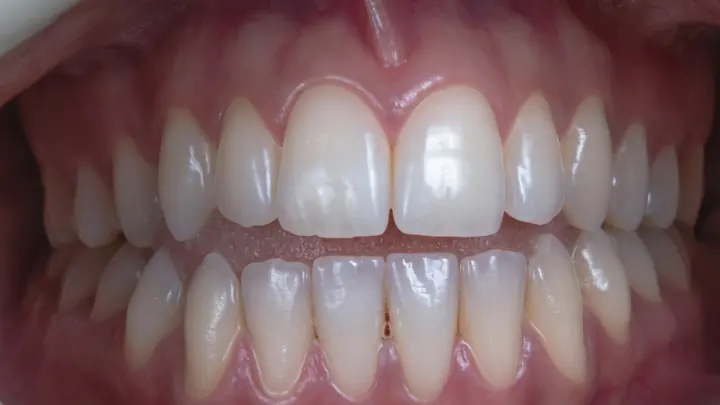
If your teeth look longer than before or have become sensitive to cold, your gums may be receding. Learn the causes, the treatments and how to stop recession progressing.
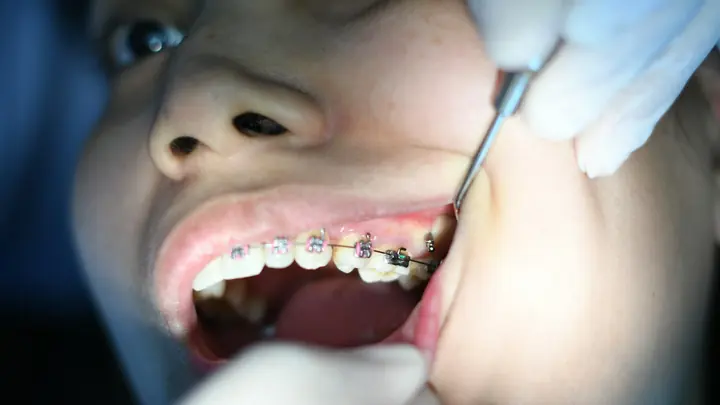
Teeth can move at any age as long as the gums and bone are healthy. Learn what differs in adult orthodontics, the checks needed before starting, and how treatment fits into daily life.