Dental Implants in Dammam: Questions to Ask Before You Start
Before starting dental implant treatment, you have every right to understand your case and plan clearly: is there enough bone, how many implants do you really need, what are the alternatives, and what happens if an implant does not fuse? A good consultation is not just about booking surgery; it includes an examination, imaging and an honest discussion of expectations. This guide helps you prepare for that consultation, whether you live in Dammam, Al-Khobar, Dhahran or elsewhere in the Eastern Province.
4 min read · Last updated
Photo: Unsplash
What should happen at the first implant consultation?
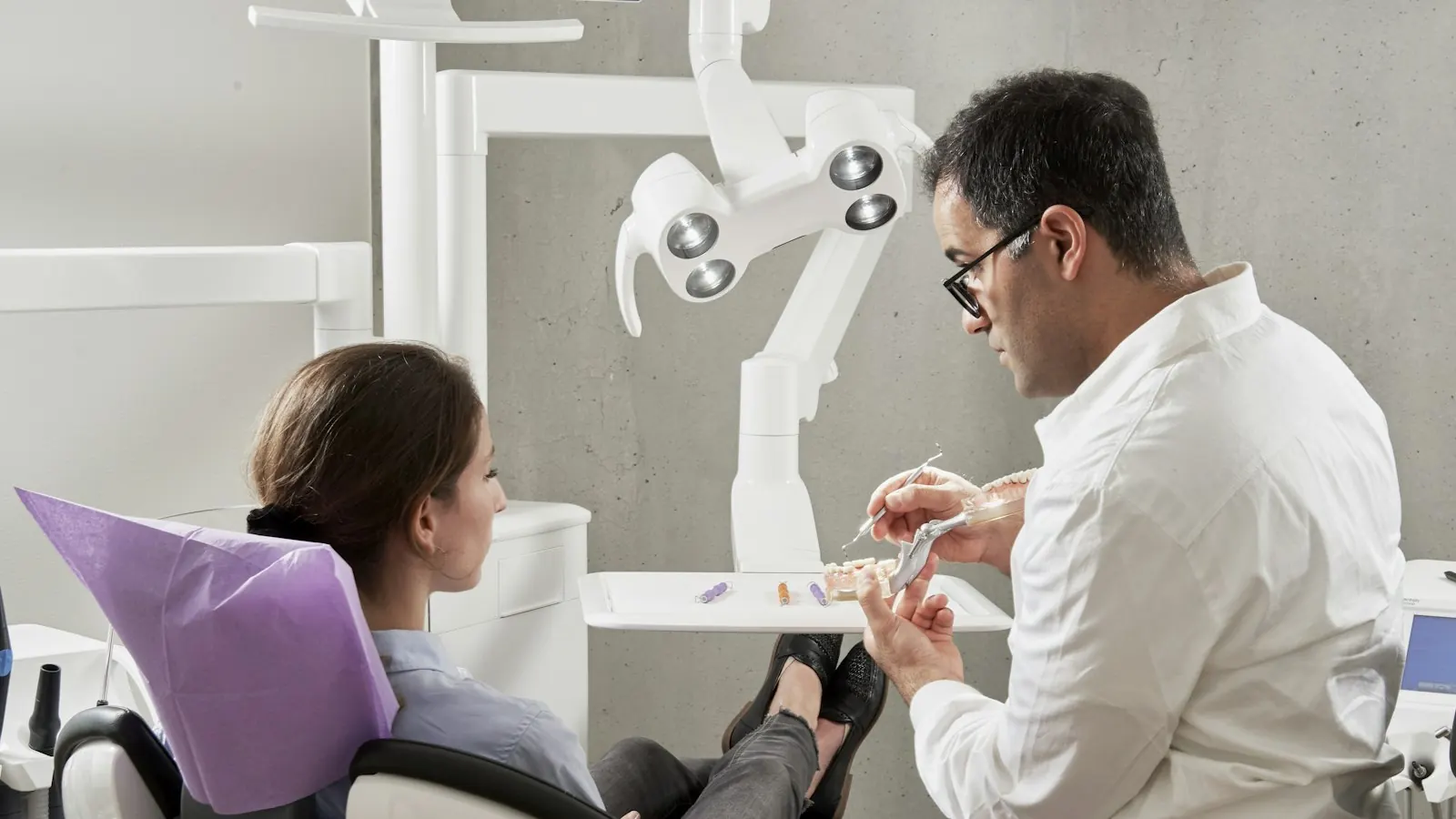
The first consultation is the foundation for everything that follows. Your dentist asks about your general health and medicines, then examines the whole mouth, not just the gap, because the gums, neighbouring teeth and bite all affect implant success.
A consultation usually includes:
Detailed questions about chronic conditions such as diabetes and heart disease, medicines such as blood thinners and osteoporosis drugs, and smoking.
A gum examination with pocket measurements, and treatment of any inflammation before implant placement.
An assessment of your bite and habits such as teeth grinding that may stress the implant later.
X-rays, and usually a 3D scan of the jaw.
An explanation of the options, including non-surgical alternatives such as a bridge or denture.
Why does the 3D scan matter?
A standard X-ray shows height roughly, but not the width of the bone or the exact distance to the nerve in the lower jaw or the sinus in the upper jaw. A cone beam CT scan (CBCT) gives a three-dimensional picture that helps your dentist choose the implant length, width and angle safely.
Based on the scan, your dentist decides whether the bone is sufficient or needs grafting, and in some cases may use a pre-designed surgical guide to position the implant. Ask to see the images and have them explained; it helps you understand why a particular plan is recommended.
Questions worth asking your dentist
Do not hesitate to ask questions. A dentist who explains calmly and answers clearly gives you more confidence in your decision. Write these down before your appointment:
Is my bone sufficient? If not, what kind of graft do I need, and how much time does it add?
How many implants do I really need? Can several teeth be replaced with fewer implants?
Which implant system and crown material will be used, and will parts be available later for maintenance?
What is the expected timeline, and will I have a temporary tooth during healing?
What happens if the implant does not fuse, and what is the follow-up plan after the crown is fitted?
What alternatives suit my case, and what are the pros and cons of each?
Signs that suggest slowing down before you agree
An implant is surgical treatment meant to last many years, so the decision should not be made under pressure. Signs worth pausing for, and perhaps seeking a second opinion: surgery offered without a full examination or suitable imaging, existing gum disease being ignored, or a guaranteed result or same-day fixed teeth promised for every case without assessment.
Other signs include no written plan explaining the stages and appointments, or being rushed to agree because of a limited-time offer. A good plan is written down and explained, mentions possible changes, and leaves you time to think.
Immediate placement of a tooth is genuinely possible in selected cases, but it is a decision your dentist makes after assessing bone quality and implant stability, not a promise that fits everyone.
How to prepare your health before surgery
Good preparation improves the chance of success. If you smoke, stop for a period before surgery that your dentist will advise, and ideally quit for good. If you have diabetes, aim to have your blood sugar well controlled with your doctor before the appointment.
Plan for the first days of recovery: soft, lukewarm food and rest from strenuous activity. People who work shifts or spend long hours outdoors in the heat may prefer a date just before their days off. If the appointment falls near Ramadan or a family occasion, discuss timing with your dentist, as post-operative medicines need regular times.
Frequently asked questions
Do I need a 3D scan before every implant?
It is used in most implant cases because it shows bone width and the position of the nerve and sinus precisely. Your dentist decides whether it is needed for your case.
Is it normal to ask for a second opinion?
Yes. Seeking a second opinion for long-term surgical treatment is normal and reasonable, and a dentist confident in their plan usually does not mind.
How many visits does an implant usually need?
Usually several visits over a few months: consultation and imaging, surgery, a healing check, then impressions and crown fitting. More visits are needed if grafting or gum treatment is required.
Can I have an implant if my gums are inflamed?
Gum disease is treated first and the case is then reassessed, because active inflammation raises the risk of bone loss around the implant later.
When to see a doctor
Whether you lost a tooth recently or years ago, an early assessment shows the state of the bone before it shrinks further and before neighbouring teeth drift into the gap. Also see a dentist if your gums bleed, other teeth feel loose, or a removable denture is bothering you. You can book a consultation at Medical Care Clinics in Al-Shati Al-Gharbi, Dammam, close to Al-Khobar and Dhahran, where our dental team will examine your case and explain the suitable options and expected treatment plan.
A crown is a cap that covers the whole tooth to protect it and restore its shape. Learn how zirconia, E.max and porcelain-fused-to-metal differ, and where each fits in the mouth.
If your teeth look longer than before or have become sensitive to cold, your gums may be receding. Learn the causes, the treatments and how to stop recession progressing.
Teeth can move at any age as long as the gums and bone are healthy. Learn what differs in adult orthodontics, the checks needed before starting, and how treatment fits into daily life.