Bridge or Dental Implant to Replace a Missing Tooth?
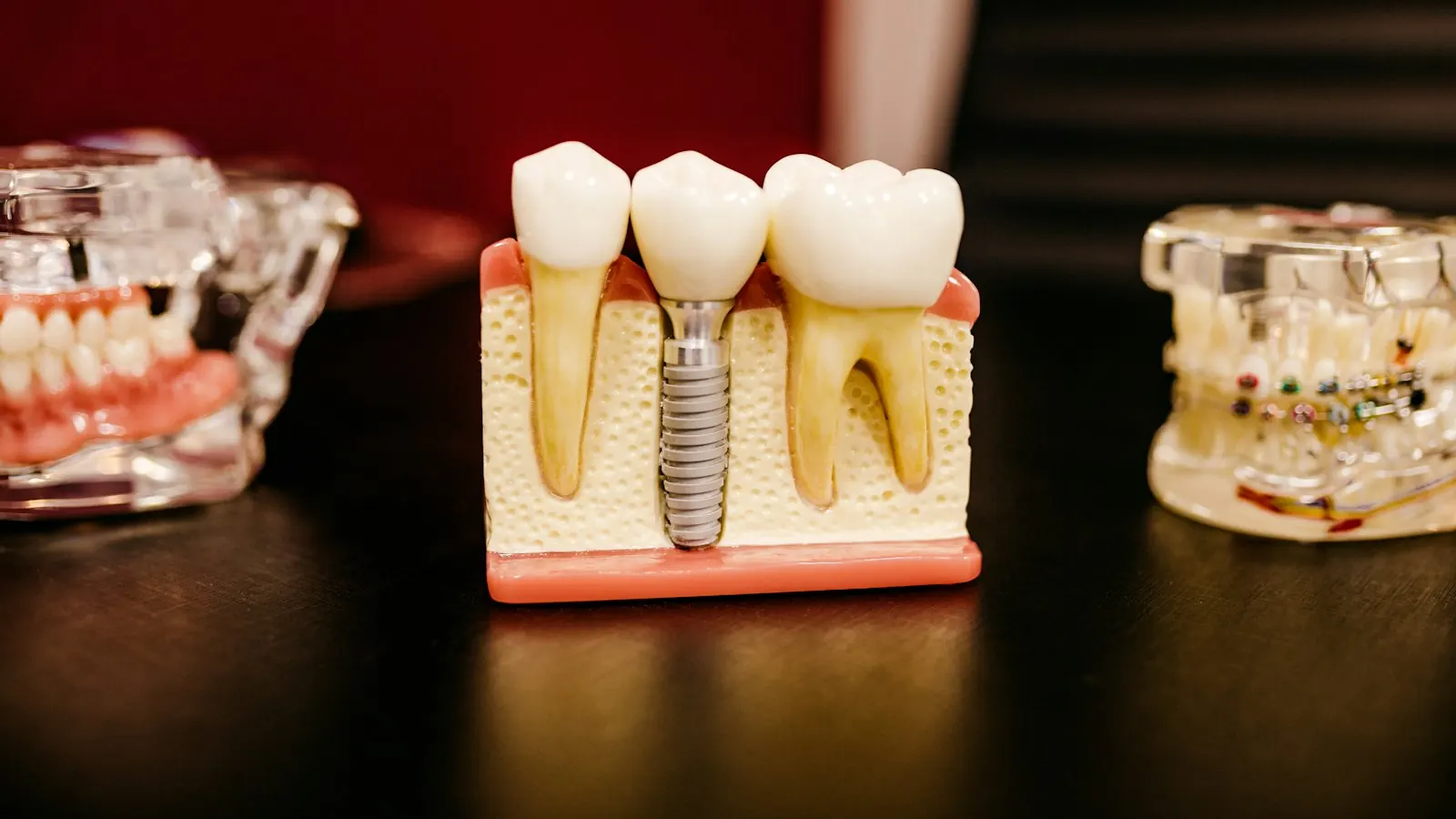
To replace a single missing tooth, most people compare two fixed options: a bridge supported by the two neighbouring teeth, and an implant placed in the jawbone on its own. An implant leaves the neighbouring teeth untouched and helps protect the bone, but it needs surgery, more time and enough bone. A bridge is quicker and needs no surgery, but it means filing down teeth that may be healthy. There is no option that is best for everyone, only the one that suits your case.
4 min read · Last updated
Photo: Unsplash
Why not just leave the gap?
After a tooth is lost, the neighbouring teeth gradually tilt into the gap, and the opposing tooth in the other jaw may drift towards it, changing the bite and creating corners that are hard to clean. The bone also shrinks over time because it no longer receives chewing pressure.
Not every gap must be filled; some back gaps can be left after the dentist's assessment. But the decision should be considered, not just postponed.
How does a bridge work, and what types are there?
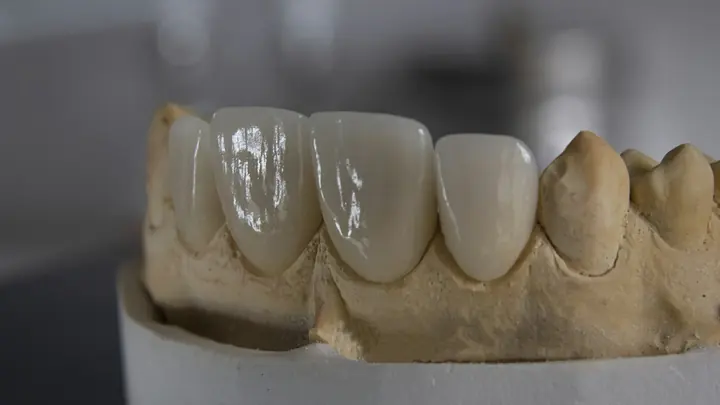
A conventional bridge is usually three joined units: two crowns on the teeth either side of the gap, which are filed down, with an artificial tooth suspended between them in place of the missing one. It is cemented in place and is not removed at home.
There is also the resin-bonded bridge, attached with a thin wing to the back of the neighbouring tooth with little filing. It is sometimes suitable for replacing a small front tooth in younger people or when the neighbouring teeth are completely healthy, but it withstands less force.
A bridge is usually completed in two or three visits over a few weeks and does not need enough bone under the gap.
A quick comparison of bridge and implant
These are the main differences your dentist will discuss with you:
Neighbouring teeth: a bridge needs them filed down; an implant leaves them alone.
Bone: an implant transfers chewing force to the bone and helps preserve it; a bridge does not stop it shrinking under the suspended tooth.
Surgery and time: a bridge needs no surgery and takes weeks; an implant needs surgery and usually 3 to 6 months to heal, longer if grafting is needed.
Cleaning: an implant is cleaned like a natural tooth; a bridge needs special tools to clean under the suspended tooth.
If problems occur: decay in one of the bridge's supporting teeth may mean replacing the whole bridge, while implant problems usually stay at that site.
Health: some conditions, medicines and smoking can make surgery less suitable, so a bridge may be simpler.
Who suits each option?
A bridge may be a good choice if the neighbouring teeth already need crowns because of large fillings or fractures, so covering them serves both purposes, or if there is not enough bone and you prefer to avoid grafting, or your health does not suit surgery.
An implant is often better when the neighbouring teeth are healthy and you do not want them filed, the bone is sufficient or can be rebuilt, your general health is stable and you are ready for a longer treatment period. In pregnancy, non-urgent surgery is postponed, and smokers or people with poorly controlled diabetes need a more careful assessment before implants.
How do you care for each?
A bridge does not decay, but the supporting teeth underneath can decay at the crown edges, and the gum under the suspended tooth can become inflamed if food collects there. So you need special floss (Superfloss) or a floss threader, interdental brushes or a water flosser to clean under the bridge every day.
An implant is cleaned with a toothbrush and floss or small brushes around it, with regular check-ups of the gum and bone. In both cases, smoking and poor cleaning shorten their life the most, and people who grind may need a night guard.
Frequently asked questions
Which lasts longer, a bridge or an implant?
Both can last many years with good care. The implant itself often lasts a very long time, while a bridge's lifespan depends on the health of the teeth supporting it. Care and check-ups are the most important factor in both.
Can a bridge be changed to an implant later?
In many cases yes, if the bone is suitable, but the neighbouring teeth will already have been filed and will need separate crowns. So it is worth thinking both options through from the start.
Is there an option other than a bridge or an implant?
Yes. A removable partial denture is simpler and less invasive and may suit people missing several teeth or who cannot have surgery, but it is less stable and must be removed and cleaned daily.
When to see a doctor
If you have recently lost a tooth, or have an old gap where neighbouring teeth have started to tilt or food collects, an assessment helps you choose the right solution before the bone shrinks further. If you already have a bridge, see a dentist if you notice a bad smell or bleeding under it, pain in a supporting tooth or looseness. You can book a consultation at Medical Care Clinics in Al-Shati Al-Gharbi, Dammam, close to Al-Khobar and Dhahran, where our dental team will compare a bridge and an implant with you for your case.
A crown is a cap that covers the whole tooth to protect it and restore its shape. Learn how zirconia, E.max and porcelain-fused-to-metal differ, and where each fits in the mouth.
If your teeth look longer than before or have become sensitive to cold, your gums may be receding. Learn the causes, the treatments and how to stop recession progressing.
Teeth can move at any age as long as the gums and bone are healthy. Learn what differs in adult orthodontics, the checks needed before starting, and how treatment fits into daily life.