Broken or Cracked Tooth: What to Do and How It Is Treated
If you break or crack a tooth, rinse your mouth with lukewarm water, keep any broken piece you find, use a cold compress on the cheek if there is swelling, and see a dentist soon even if it does not hurt. Treatment depends on how deep the break goes: from simple smoothing or a tooth-coloured filling, to a crown or root canal treatment, and sometimes extraction in severe cases. The earlier it is checked, the better the chance of keeping the tooth.
4 min read · Last updated
Photo: Unsplash
What should I do as soon as a tooth breaks?
There is no need to panic; most broken teeth can be treated. These simple steps protect the tooth until your appointment:
Gently rinse your mouth with lukewarm water to clear food and small fragments.
If you find the broken piece, keep it in a clean container of milk or water and bring it with you; the dentist can sometimes bond it back.
If there is bleeding, press on it with clean gauze for about 10 minutes.
Hold a cold compress wrapped in cloth against the outside of your cheek to reduce swelling.
If a sharp edge is cutting your tongue, you can cover it temporarily with orthodontic wax or sugar-free chewing gum.
You can take an over-the-counter painkiller as directed on the pack; never place tablets directly on the gum, as they can burn it.
What types of tooth fractures and cracks are there?
Not all breaks are the same. Dentists usually classify them by where they are and how deep they go:
Craze lines: very fine surface lines in the enamel that appear with age, rarely hurt and usually need no treatment.
Chipped edge or tip: affects the enamel and may reach the dentine, causing sensitivity to cold or sweet things.
Fractured cusp: part of the chewing surface breaks away, often around a large old filling.
Cracked tooth: a crack runs from the chewing surface towards the root and may cause on-and-off pain when biting.
Split tooth or vertical root fracture: the crack divides the tooth or starts in the root itself; these are the most difficult cases.
What are the signs of a crack you cannot see?
Some cracks cannot be seen and do not always show up on X-rays, but they give typical signs. The best known is a sharp, brief pain when biting on something particular or when releasing the bite, sudden sensitivity to cold, and pain that comes and goes in a tooth you find hard to pinpoint.
Your dentist finds the crack through a careful examination, a bite test on a special instrument tooth by tooth, shining a bright light through the tooth and sometimes after removing an old filling. Early diagnosis matters, because a crack can spread over time towards the nerve or the root.
How is a broken tooth treated, depending on severity?
Your dentist chooses treatment after an examination and X-rays, and plans can differ from person to person:
Small enamel chip: smoothing and polishing the edge, or tooth-coloured bonding.
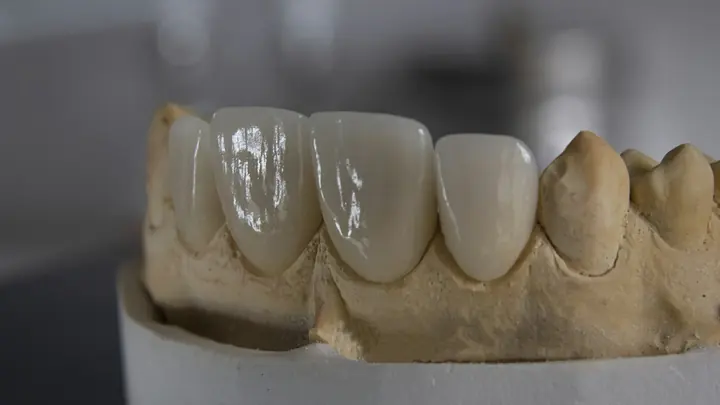
Larger break in a front tooth: a larger cosmetic filling or a porcelain veneer, depending on the case and appearance.
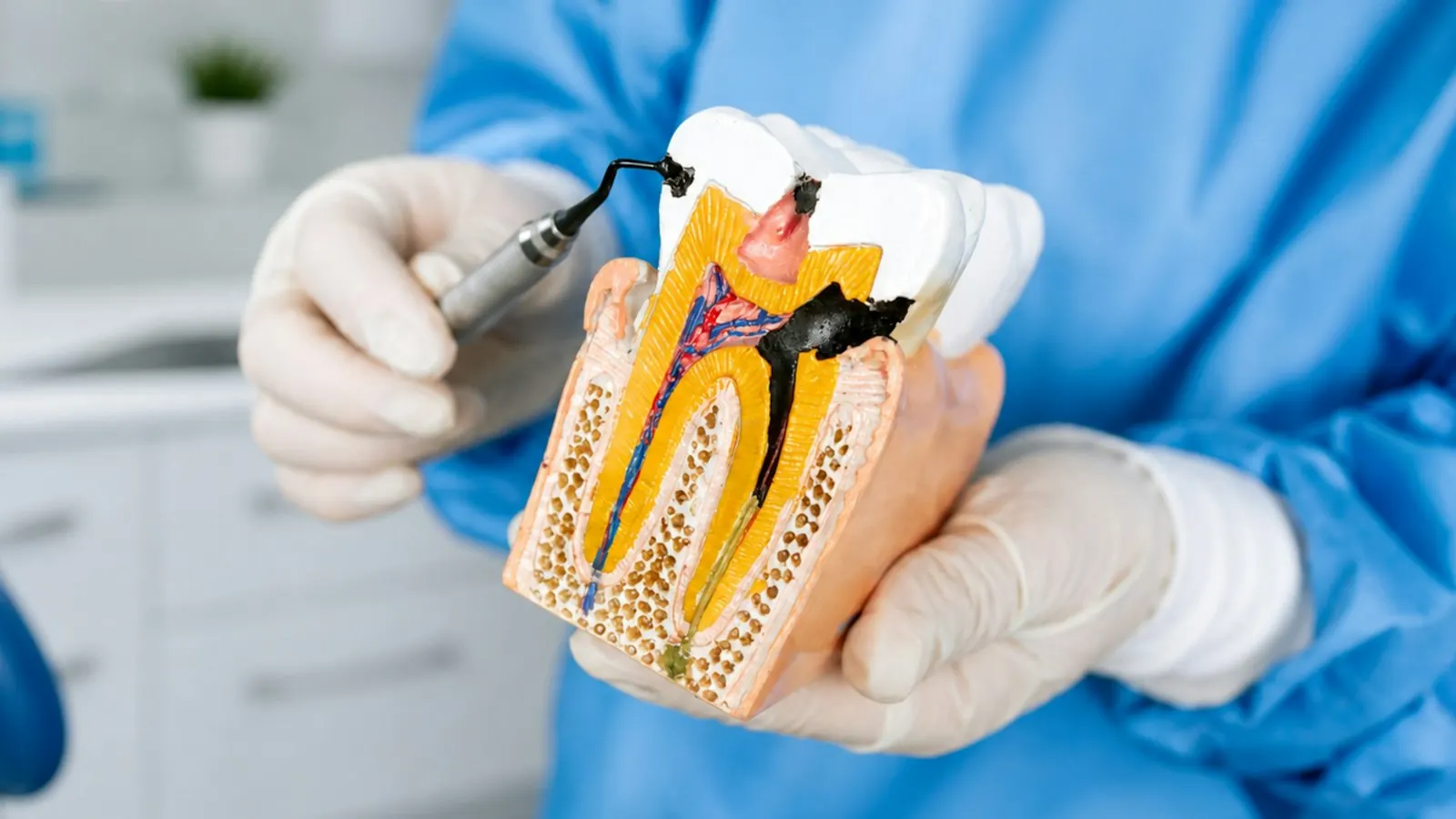
Fractured cusp or cracked tooth: usually a crown or partial restoration that covers the tooth and stops the crack spreading.
Break or crack reaching the nerve: root canal treatment first, then a crown to protect the tooth.
Split tooth or vertical root fracture: the tooth may not be savable, so extraction is advised, followed by an implant or bridge.
What causes teeth to break, and how can I prevent it?
Teeth usually break from suddenly biting on something hard, such as date stones, ice, nutshells or hard sweets, or from a knock during sport or a fall. Large fillings, root-treated teeth without a crown and night-time grinding all make breaks more likely.
To prevent it: take care with date and olive stones, do not crunch ice or crack nuts or open packaging with your teeth, wear a mouthguard for contact sports, and ask your dentist about a night guard if you notice you clench or grind.
Frequently asked questions
Can a cracked tooth heal on its own?
No. Enamel does not regenerate the way bone heals. Treatment aims to stop the crack spreading and protect the tooth, so waiting for pain to appear is not advised.
A small piece of my tooth broke and it does not hurt. Can I wait?
You can wait a few days if there is no pain or sharp edge, but book an appointment soon. A small chip is usually fixed with a simple procedure, and delay can let it get bigger.
Does a cracked tooth show on an X-ray?
Not always. Many cracks are too fine to appear on standard X-rays, so the dentist relies on the clinical examination and bite tests, and may request extra imaging in some cases.
What if my child breaks a tooth?
Have it seen by a dentist the same day if possible, whether it is a baby or a permanent tooth. Injury to a baby tooth can affect the permanent tooth beneath it, and a young permanent tooth needs prompt assessment to protect its nerve.
When to see a doctor
See a dentist soon after any break or crack, however small. Seek urgent care if the pain is severe or constant, a pink spot or blood appears in the centre of the broken tooth (which may mean the nerve is exposed), the tooth has moved, or your gum or face swells. If the injury came from a hard blow to the face or head with dizziness, vomiting or a deep cut, go to a hospital emergency department first. You can book an appointment at Medical Care Clinics in Al-Shati Al-Gharbi, Dammam, close to Al-Khobar and Dhahran, where our dental team will examine the tooth and explain the right treatment for the depth of the break.
A crown is a cap that covers the whole tooth to protect it and restore its shape. Learn how zirconia, E.max and porcelain-fused-to-metal differ, and where each fits in the mouth.
If your teeth look longer than before or have become sensitive to cold, your gums may be receding. Learn the causes, the treatments and how to stop recession progressing.
Teeth can move at any age as long as the gums and bone are healthy. Learn what differs in adult orthodontics, the checks needed before starting, and how treatment fits into daily life.